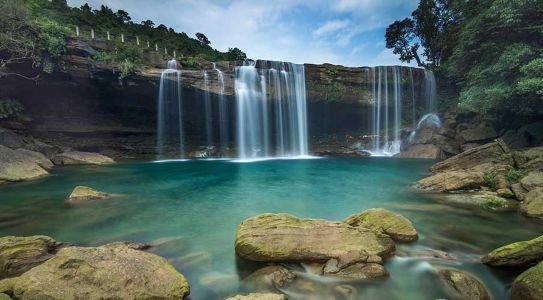
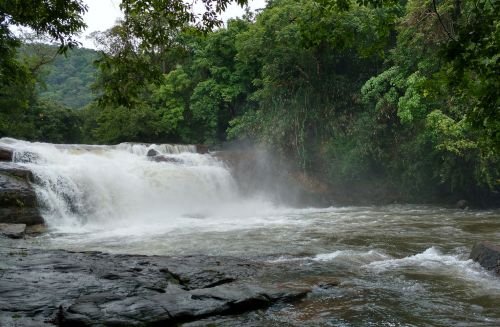
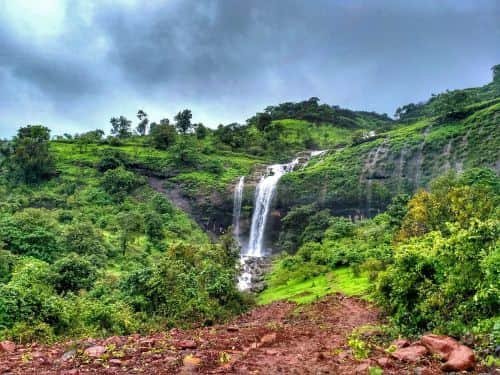
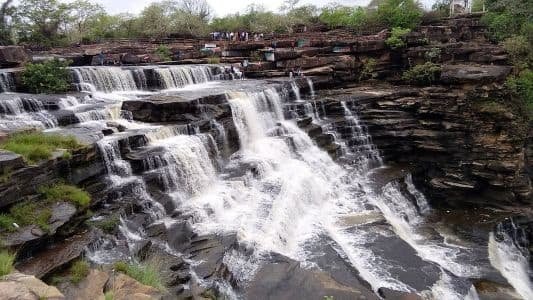
Rajdari Waterfall is a broad, stepped cascade hidden inside the forested Chandraprabha Wildlife Sanctuary in Chandauli district, Uttar Pradesh. Instead of making one narrow vertical drop, the water spreads across rocky ledges, creating a wide curtain-like waterfall that becomes especially impressive during the monsoon.
The waterfall is around 20 km from Chakia and roughly 60–70 km from Varanasi, making it a popular nature day trip from the city. Rajdari is also closely paired with Devdari Waterfall, which lies only a few kilometres away within the same sanctuary. The Chandauli district administration describes the two waterfalls as major attractions of the Chandraprabha forest.
Rajdari Waterfall: Quick Facts
- Location: Chandraprabha Wildlife Sanctuary, Chandauli district, Uttar Pradesh
- Nearest town: Chakia
- Distance from Chakia: about 20 km
- Distance from Varanasi: roughly 60–70 km
- Distance from Chandauli town: around 30–40 km, depending on the route
- Watercourse: Chandraprabha River system
- Height: local Chandauli tourism information describes it as about 65 ft
- Timings: daylight hours; some current listings report approximately 8 AM–4 PM
- Entry: official tourism information varies; forest/vehicle charges may apply at the sanctuary gate
- Best season: July to October for stronger flow
- Nearby waterfall: Devdari, around 3 km away
- Setting: forest, rocky plateau and waterfall viewpoints
What Makes Rajdari Waterfall Special?
Rajdari’s shape distinguishes it from many waterfalls in this region. Water flows over a series of rocky levels, giving the cascade a staircase-like appearance rather than falling directly from a single cliff.
Local Chandauli tourism information describes Rajdari as about 65 feet high and notes that the site has been developed as a picnic attraction, with designated points for enjoying the scenery and taking photographs.
The surrounding environment is equally important. Rajdari lies inside Chandraprabha Wildlife Sanctuary, a roughly 78 sq km protected forest between Chakia and Naugarh. The Botanical Survey of India identifies Rajdari and Devdari as two of the sanctuary’s well-known waterfall and picnic sites.
Rajdari Waterfall Timings and Entry Fee
There is no single consistently published timing across government and visitor sources. The regional tourism guide describes Rajdari as best visited from sunrise to sunset, while current local listings commonly give approximately 8 AM to 4 PM.
For a practical visit, aim to arrive between 8 AM and early afternoon. The waterfall is inside a forest area, so there is little reason to plan a late-evening visit.
Entry-fee information also varies. One regional tourism guide lists the waterfall itself as free, while the approach passes a Forest Department check post and sanctuary gate, where local forest or vehicle charges may apply. Carry cash and check the displayed charges at the gate rather than relying on an old online price.
Best Time to Visit Rajdari Waterfall
Rajdari is strongly influenced by rainfall. The best waterfall experience generally comes during the monsoon and early post-monsoon period.
A useful seasonal guide is:
- July to September: strongest water flow and lush green forest, but wet rocks can be dangerous.
- October: often a good balance between flowing water and improving weather.
- November to February: comfortable for exploring the sanctuary, though waterfall volume gradually decreases.
- March to June: hot and comparatively dry, so the waterfall may be far less impressive.
Regional tourism information recommends July to February, with the monsoon producing the strongest flow.
If heavy rainfall or severe weather is forecast, don’t travel solely because the waterfall will be fuller. Forest access and water conditions can change quickly.
How to Reach Rajdari Waterfall
From Varanasi
Rajdari is approximately 60–70 km from Varanasi. The usual road journey heads towards Chandauli and Chakia before continuing on the Chakia–Naugarh road towards Chandraprabha Wildlife Sanctuary.
A private car or hired taxi is the easiest option because public transport becomes limited closer to the forest. Chandauli’s tourism information places Rajdari around 60 km from Varanasi and 20 km from Chakia.
From Chakia
Chakia is the most convenient nearby town. From here, follow the road towards Naugarh. After leaving the main Chakia–Naugarh road for Rajdari, visitors reach a Forest Department check post and entrance gate leading towards the waterfall area.
By Train
Pt. Deen Dayal Upadhyaya Junction, formerly Mughalsarai Junction, is the most useful major railway station. The Chandauli district administration places it roughly 50 km from the waterfall area.
From the station, hire a taxi or travel towards Chakia and arrange onward transport.
By Bus
Public and shared transport can take travellers towards Chakia. The district administration specifically mentions taking a shared jeep from Mughalsarai to Chakia and then another local vehicle towards the waterfall area.
A private vehicle remains more convenient if you want to visit both Rajdari and Devdari without depending on return transport.
By Air
Lal Bahadur Shastri International Airport, Varanasi is the nearest major airport. Chandauli district’s tourism information gives an approximate distance of 95 km to the waterfall area.
Nearby Places to Visit
Rajdari is best combined with attractions in the Chandraprabha and Chakia region.
- Devdari Waterfall: The obvious companion attraction. It is approximately 3 km from Rajdari and has a more direct plunge into a gorge.
- Chandraprabha Wildlife Sanctuary: The waterfalls themselves sit within this protected forest, which includes woodland, rivers and wildlife habitat.
- Chandraprabha Dam: A useful scenic stop in the same wider forest area.
- Latif Shah Dam: One of Chandauli’s established local attractions and among the district’s older dams.
- Naugarh: A forested area farther along the Chakia–Naugarh side that can be included in a longer Chandauli trip.
For most visitors, Rajdari + Devdari + Chandraprabha forest is enough for an enjoyable day without making the itinerary unnecessarily rushed.
Safety at Rajdari Waterfall
The broad rocks around Rajdari can look easy to walk across, but they become extremely slippery when wet. Strong monsoon flow also makes apparently shallow sections dangerous.
Visitors should:
- Stay within designated visitor and viewpoint areas.
- Never cross fast-flowing water above the waterfall.
- Keep away from the edge of the cascade and gorge.
- Wear footwear with strong grip.
- Keep children under close supervision.
- Avoid visiting during extreme rainfall or flooding.
- Follow instructions from Forest Department staff.
- Do not enter closed caves or restricted forest sections.
- Carry water and basic food because facilities are limited.
- Take all plastic and other rubbish back with you.
The sanctuary is a protected natural area, so avoid loud music, feeding wildlife or wandering away from recognised visitor routes.
Rajdari Waterfall FAQs
Q1. How far is Rajdari Waterfall from Varanasi?
A: Rajdari is roughly 60–70 km from Varanasi. Local Chandauli tourism information gives a distance of about 60 km, while the district administration places the Chandraprabha forest around 70 km from Varanasi.
Q2. What are the timings of Rajdari Waterfall?
A: Regional tourism information recommends visiting between sunrise and sunset, while some current listings give approximately 8 AM–4 PM. A morning or early-afternoon visit is the most practical choice.
Q3. What is the best time to visit Rajdari Waterfall?
A: July to October is best for seeing stronger water flow and green surroundings. Winter up to February is pleasant for a forest visit, although the waterfall gradually becomes weaker.
Q4. How far is Devdari Waterfall from Rajdari?
A: Regional tourism information places Devdari about 3 km from Rajdari, making it easy to visit both on the same trip.
Q5. Is Rajdari Waterfall suitable for a day trip from Varanasi?
A: Yes. Its roughly 60–70 km distance from Varanasi makes Rajdari and nearby Devdari practical for a full-day road trip. Start early so you can explore both waterfalls and leave the forest well before dark.