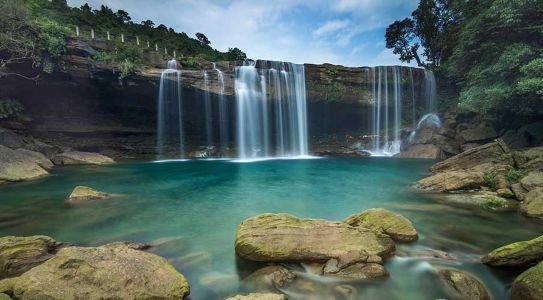
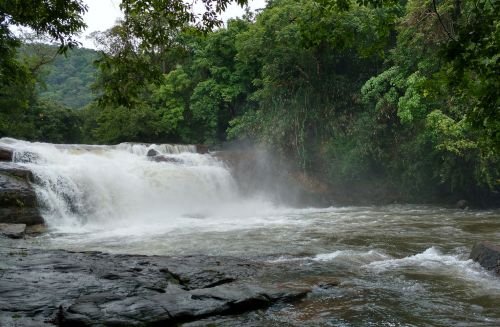
Searching for Khandi Waterfall can be slightly confusing because Khandi is not just one clearly defined waterfall. It is a monsoon waterfall belt around Khandi village in Maval taluka, Pune district, where dozens of seasonal streams appear across the Sahyadri hills. Along the drive, visitors encounter waterfalls around Mau, Wadeshwar, Bendewadi and other small villages before eventually reaching the Khandi side of the Thokarwadi backwaters. Recent visitors continue to describe the entire route as a landscape filled with waterfalls rather than a single tourist complex.
Located roughly 70–80 km from Pune, Khandi is mainly a road-trip destination. Its combination of waterfalls, paddy fields, mist-covered hills and Thokarwadi reservoir views makes July to September the most rewarding period.
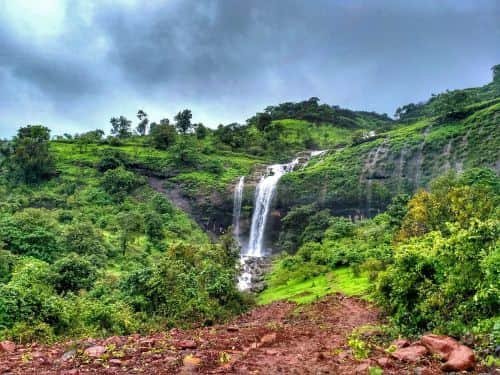
Khandi Waterfall: Quick Facts
- Location: Khandi village area, Maval taluka, Pune district, Maharashtra
- Distance from Pune: roughly 70–80 km, depending on starting point and route
- Distance from Kanhe Phata: approximately 30–35 km
- Type: Group of seasonal monsoon waterfalls
- Best season: July to September
- Timings: No official fixed hours for the general waterfall belt
- Recommended visit: Daylight hours, preferably 7 AM–5 PM
- Entry fee: Most natural roadside waterfalls have no standard government ticket; privately managed falls may charge separately
- Trek: Varies from roadside viewing to 10–20 minute walks
- Nearest useful railway station: Kanhe
- Ideal duration: Half day to full day
- Nearby attraction: Thokarwadi Dam and backwaters
Khandi Is a Waterfall Route, Not Just One Waterfall
This is the most useful thing to understand before travelling.
Khandi Waterfalls is commonly used as a collective name for the numerous monsoon cascades between Kanhe, Mau, Wadeshwar, Bendewadi and Khandi. An older route guide describes waterfalls appearing continuously on the Wadeshwar–Khandi road, with Thokarwadi backwaters forming much of the surrounding landscape.
A detailed 2025 visitor report identifies several commonly visited stops:
- Jagtap Waterfall
- Mau Waterfall
- Wadeshwar Waterfalls
- Dahuli Waterfall
- Lalwadi Waterfalls
- Bendewadi Waterfall
- Khandi Point and nearby cascades
The same report describes more than 40 seasonal waterfalls appearing across the wider route during good monsoon conditions. That number is best treated as a visitor estimate rather than an official count.
This also explains why online information about “Khandi Waterfall” often gives different distances, entrance fees and walking times: different writers are describing different waterfalls along the same road.
Khandi Waterfall Timings and Entry Fee
There are no official government opening and closing hours for the overall Khandi waterfall route.
Because these are natural seasonal waterfalls spread across village and rural land, a daylight visit is most sensible. Plan approximately 7 AM to 5 PM, particularly if you are unfamiliar with the roads.
Entry charges depend entirely on the waterfall.
Many natural roadside cascades are free, but some falls cross private land or are locally managed. For example, a detailed July 2025 visitor report described Jagtap Waterfall as a privately managed family attraction with its own admission charge, while Bendewadi had separate small local parking and access charges.
Therefore, there is no single correct “Khandi Waterfall entry fee.” Carry cash and check the displayed tariff at whichever waterfall you choose.
Which Khandi Waterfall Should You Visit?
Bendewadi Waterfall
Bendewadi is one of the better-known cascades on the Khandi route. A 2023 visitor report describes it as a prominent waterfall reached after a short walk from village parking.
A more recent 2025 account gives a walking time of approximately 15–20 minutes from parking.
Mau Waterfall
Mau is one of the earlier waterfalls when travelling towards Khandi. It involves a short walk from the road and can be useful if you do not want to drive all the way to Khandi Point.
Wadeshwar Waterfalls
Several seasonal cascades appear around the Wadeshwar section, with Thokarwadi Dam on the opposite side of the road. This section is particularly attractive for landscape photography during good monsoon weather.
Khandi Point
If your priority is the drive and panoramic scenery rather than standing beneath a waterfall, continue towards Khandi Point. The route follows the Thokarwadi backwaters and provides views of mountains, seasonal cascades and windmills.
Best Time to Visit Khandi Waterfalls
Khandi is overwhelmingly a monsoon destination.
June: The first seasonal streams begin appearing once rainfall becomes consistent, but waterfall flow can be unpredictable.
July and August: Usually the best months for powerful cascades, bright-green hills, mist and full monsoon scenery.
September: Often an excellent option after a healthy monsoon. Waterfalls may remain active while continuous rainfall becomes somewhat less frequent.
October onward: Most of the smaller waterfalls weaken or disappear because they are rain-fed.
Recent August 2026 visitors reported strong flow at both Bendewadi and Mau waterfalls and described the mountains as intensely green, confirming that the route remains an active monsoon outing.
How to Reach Khandi Waterfall
From Pune
The traditional approach is:
Pune → Old Mumbai–Pune Highway → Somatane Phata → Kanhe Phata → Takve/Wadeshwar → Khandi
An established route guide places Khandi roughly 78 km from Pune and recommends turning from the old Pune–Mumbai road at Kanhe Phata towards Takve and Wadeshwar.
A 2025 visitor similarly placed Khandi around 80 km from Pune and roughly 35 km beyond Kanhe Phata.
A private car or motorcycle is the most practical choice.
From Lonavala
Khandi lies in the wider Maval countryside rather than central Lonavala. Do not assume the quickest route is through Lonavala town simply because many websites call it a “waterfall near Lonavala.”
Check the current navigation route towards Khandi, Maval, because road conditions around the reservoir can change significantly during the monsoon.
By Train
For the Kanhe-side approach, Kanhe railway station is the most useful local station. From there, however, the waterfall belt extends for many kilometres into rural Maval.
Public transport for exploring multiple waterfall stops is limited, so arranging a local vehicle is preferable.
Travellers coming from Mumbai or Pune can also use larger stations such as Lonavala and then continue by road, but this may not be the most direct approach for every Khandi waterfall.
By Bus
Local buses serve settlements in Maval, but they are not ideal for waterfall hopping. The cascades are scattered along a long rural route, and some require leaving the main road.
A private vehicle provides much greater flexibility.
Current Road Conditions
Road quality deserves attention when planning Khandi.
In July 2026, recent riders reported ongoing roadworks around the Wadeshwar side and muddy sections near the Khandi Point approach. They also reported controlled blasting activity near Khandi Point, with security personnel discouraging access close to the viewpoint at that time.
Conditions appear to be changing as work progresses. By late August 2026, another visitor described the route to Bendewadi and Mau as generally good, although construction remained in some sections.
For this reason, do not rely on an old road-condition report. Check the current situation before completing the entire Thokarwadi loop, particularly after heavy rain.
Nearby Places to Visit
Thokarwadi Dam
The reservoir is the defining landscape feature of the Khandi route. Several waterfall sections provide views across its backwaters, and the road runs through the surrounding hills.
Bendewadi Waterfall
One of the most practical waterfalls to include if you want a short walk and closer waterfall experience rather than simply viewing cascades from the road.
Mau Waterfall
Another convenient monsoon stop on the Khandi route, located before the deeper sections towards the reservoir.
Kamshet
Kamshet is a useful nearby base with railway connectivity and access to the wider Maval region. It is also well known for paragliding and Sahyadri scenery.
Lohagad and Visapur
Both forts lie in the wider Maval region. However, either fort requires significant additional walking, so combining a fort trek with a complete Khandi waterfall circuit can make for a very long monsoon day.
For a relaxed trip, Kanhe → Mau/Wadeshwar → Bendewadi → Khandi/Thokarwadi scenery → return provides enough variety without trying to cover distant attractions.
Safety Tips for Khandi Waterfalls
The waterfalls may look gentle from the road, but conditions can change rapidly during heavy Sahyadri rainfall.
- Avoid entering a waterfall during extremely strong flow.
- Do not climb above cascades on slippery rock.
- Stay away from reservoir edges during poor visibility.
- Never jump into unfamiliar pools.
- Wear shoes with reliable wet-surface grip.
- Drive slowly on narrow village roads.
- Watch for potholes, mud and ongoing road construction.
- Avoid completing unfamiliar reservoir loops after dark.
- Do not block village roads while parking.
- Follow any security, police or local access restrictions.
- Carry water and basic food because commercial facilities are limited.
- Take all plastic and food waste back with you.
Recent road reports are particularly important: construction and access conditions around Khandi have changed repeatedly through 2026.
Khandi Waterfall FAQs
Q1. Where is Khandi Waterfall located?
A: Khandi Waterfalls are around Khandi village in Maval taluka, Pune district, Maharashtra, near the Thokarwadi reservoir. The name commonly refers to numerous seasonal waterfalls spread along the Kanhe–Wadeshwar–Khandi route rather than one single cascade.
Q2. What are the timings of Khandi Waterfall?
A: There are no official fixed timings for the overall natural waterfall belt. A daylight visit is recommended, ideally from early morning until late afternoon. Individual privately managed waterfalls may have their own opening hours.
Q3. Is there an entry fee for Khandi Waterfall?
A: There is no single Khandi Waterfall ticket. Many natural cascades can be viewed without a government entry fee, while privately managed locations such as Jagtap and some village-access waterfalls charge separately.
Q4. How far is Khandi Waterfall from Pune?
A: Depending on your starting point and chosen waterfall, expect roughly 70–80 km from Pune. An established route guide places Khandi around 78 km away, while recent visitors commonly report approximately 80 km.
Q5. Which month is best for Khandi Waterfalls?
A: July to September is the best period. July and August normally provide the strongest waterfall flow, while September can offer active cascades with somewhat less persistent rainfall. Khandi’s waterfalls are seasonal, so most become weak or disappear after the monsoon.