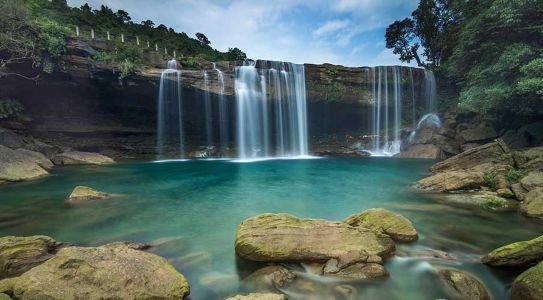
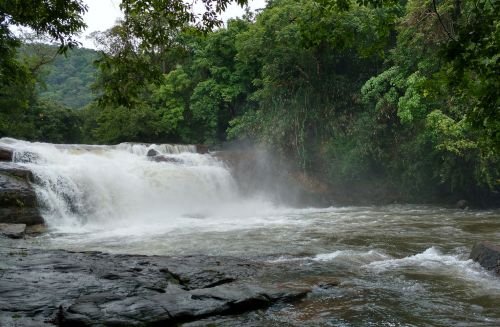
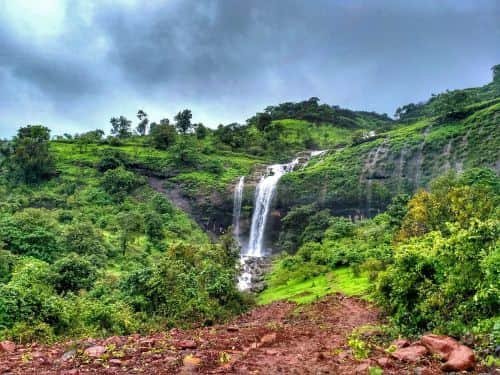
Nanemachi Waterfall is not a roadside monsoon stop. Reaching it means leaving the main roads around Mahad in Raigad district, travelling towards a small base village and then walking through a wet forest trail until a tall waterfall appears between the cliffs. The waterfall drops into a distinctive blue-green natural pool, which has become one of its most recognisable features.
Located in Mahad taluka, Nanemachi is roughly 25 km from Mahad and is primarily a monsoon trekking destination. Current trekking information commonly describes the waterfall as approximately 400 feet high, although there is no authoritative government measurement published for its exact height. The forest walk is manageable for regular walkers, but rain, mud and slippery rocks can quickly change the difficulty.

Nanemachi Waterfall: Quick Facts
- Location: Mahad taluka, Raigad district, Maharashtra
- Nearest major town: Mahad
- Distance from Mahad: roughly 25 km to the base-village area
- Common base points: Waki Gavthan / Shevate-Gugulshi area
- Approximate waterfall height: around 400 ft, based on trekking sources
- Trek distance: commonly around 3–4 km round trip, though routes vary
- Trek time: roughly 1–1.5 hours each way at a relaxed monsoon pace
- Difficulty: easy to moderate depending on rain and trail conditions
- Timings: no official fixed opening hours; daylight visit recommended
- Entry fee: no verified government entry tariff; local parking/access charges may apply
- Best season: July to September
- Main attraction: tall monsoon cascade, forest trail and blue-green pool
What Is Special About Nanemachi Waterfall?
Nanemachi’s setting is more important than simply its reported height. The waterfall is enclosed by dense vegetation and dark rock, with the water collecting in a deep-looking pool below.
The trek itself also forms a major part of the visit. Current route descriptions take walkers through agricultural land, small streams and increasingly dense forest before reaching a final rocky section near the waterfall.
Nanemachi is sometimes promoted as a “hidden waterfall,” but that description has become less accurate as its popularity has increased. Organised monsoon groups now regularly run trips here from Mumbai and Pune. If you want a quieter experience, an early weekday visit is preferable to a peak-season weekend.
Nanemachi Waterfall Timings and Entry Fee
Nanemachi is a natural forest attraction rather than a formally developed tourism complex, and there is no reliable official source publishing fixed opening and closing hours.
Treat it as a daylight-only trek. Starting between about 7 AM and 10 AM is practical because it gives you enough time to complete the forest walk, spend some time near the falls and return before poor light or afternoon weather becomes a concern.
There is similarly no dependable government-published standard entry fee. Local villagers may collect parking or other access-related charges, so carry some cash.
Avoid beginning the trek late in the afternoon even if an online map describes the waterfall as open 24 hours.
The Trek to Nanemachi Waterfall
Current trekking guides commonly describe the route as approximately 3–4 km for the round trip, although longer distances are reported when routes include nearby waterfalls or use different starting points.
From the Waki Gavthan side, the initial section is relatively straightforward, passing fields and streams. The path then enters denser forest and becomes muddier and rockier. The final approach involves slippery stones near the waterfall.
Carry:
- Trekking shoes with strong grip
- 2 litres of drinking water
- Raincoat or poncho
- Quick-drying clothes
- Waterproof protection for your phone
- Basic first-aid supplies
- Light snacks
Leeches can occur on forest trails during the monsoon, so full-length clothing and proper footwear are useful.
Best Time to Visit Nanemachi Waterfall
Nanemachi is essentially a monsoon waterfall.
July to September is the most dependable visiting period. Rain transforms the surrounding forest, fills the streams and produces the powerful waterfall seen in photographs. Outside the monsoon, the flow can become weak or nearly disappear.
However, don’t deliberately choose a day of extreme rainfall simply to see more water. A recorded trek report warns against visiting during extreme rain because of slippery terrain and possible landslide risk.
A day with moderate rain after several days of normal monsoon weather is generally more practical than travelling during a severe weather warning.
How to Reach Nanemachi Waterfall
From Mahad
Mahad is the most practical gateway to Nanemachi. The base-village area is approximately 25 km away.
Travel from Mahad towards the Birwadi side and continue towards the Waki Gavthan/Shevate-Gugulshi area. The final directions can vary according to the trailhead being used, so confirm your starting point before leaving Mahad.
From Mumbai
The journey from Mumbai is roughly 200–240 km, depending on the starting point and route. Drive south on NH 66 towards Mangaon and Mahad, then continue towards the base village.
Because the journey is long and the trek is best started early, many organised groups leave Mumbai at night.
From Pune
Distances quoted from Pune vary substantially by route, with current trek operators giving roughly 130–175 km. The traditional approach is towards Mahad via the Bhor/Varandha side before continuing towards the base village.
Monsoon road conditions in the ghats should always be checked before departure.
By Train
Veer is one of the useful railway stations for the Mahad/Raigad region. Maharashtra Tourism also identifies Veer as an important railhead for reaching Raigad destinations. From the station, continue towards Mahad and arrange local road transport to the waterfall’s base village.
By Bus
MSRTC and private buses connect Mahad with major cities. Public transport becomes much more limited beyond Mahad, so travellers may need to arrange a local taxi, rickshaw or jeep for the final journey.
Nearby Places to Visit
Nanemachi can be combined with a few attractions around Mahad and the Sahyadri region:
- Saatsada Waterfall: The most natural waterfall to combine with Nanemachi; several trekking groups cover both in one trip.
- Shivthar Ghal: A historic cave associated with Samarth Ramdas and Dasbodh, surrounded by particularly attractive scenery during the monsoon.
- Varandha Ghat: A dramatic Sahyadri mountain pass with monsoon viewpoints and seasonal waterfalls.
- Raigad Fort: One of Maharashtra’s most historically important forts and a better choice for a separate half-day or full-day excursion.
- Mahad: A useful base for food, accommodation, fuel and onward transport.
Trying to combine Nanemachi, a long trek and several distant attractions on the same day can make the trip unnecessarily rushed.
Safety at Nanemachi Waterfall
The pool beneath the waterfall should not be treated as a normal swimming pool. Its depth is difficult to judge visually, and currents become stronger during heavy rain.
For a safer visit:
- Do not jump or dive into the pool.
- Avoid standing directly under extremely heavy water flow.
- Stay away during severe rain or flood conditions.
- Wear proper trekking shoes rather than flip-flops.
- Don’t enter unfamiliar forest routes after dark.
- Keep away from unstable cliff and rock sections.
- Download offline directions because mobile coverage can become unreliable.
- Carry all plastic bottles and food packaging back with you.
Nanemachi Waterfall FAQs
Q1. Where is Nanemachi Waterfall located?
A: Nanemachi Waterfall is in Mahad taluka of Raigad district, Maharashtra, inside a forested Sahyadri landscape. Mahad is the nearest major town.
Q2. How long is the Nanemachi Waterfall trek?
A: Current trek guides commonly describe a 3–4 km round trip, with roughly one to 1.5 hours required to reach the waterfall depending on pace, rainfall and the exact starting point.
Q3. What is the best time to visit Nanemachi Waterfall?
A: July to September is the main season because Nanemachi depends heavily on monsoon rainfall. Avoid visiting during extreme rain, when slippery terrain and landslide risks increase.
Q4. Can beginners visit Nanemachi Waterfall?
A: Yes, the standard trek is generally considered beginner-friendly, but monsoon mud, stream crossings and slippery rocks mean reasonable fitness and proper footwear are still necessary.
Q5. Can Nanemachi and Saatsada waterfalls be visited together?
A: Yes. Several organised trekking itineraries cover Nanemachi and Saatsada Waterfall on the same trip because they are in the same wider trekking area. Allow enough time for both rather than starting late in the day.