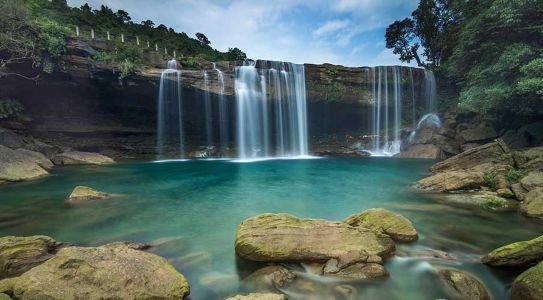
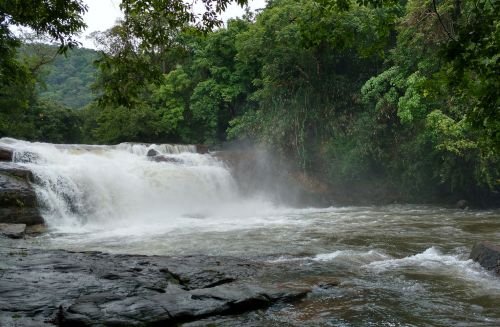
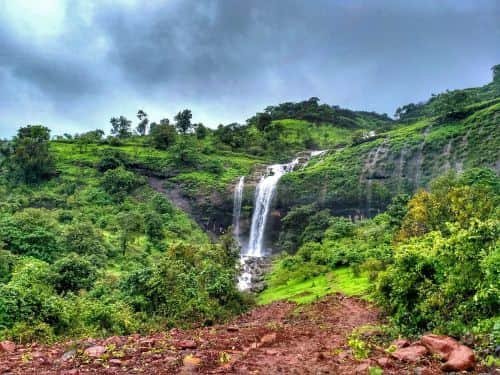
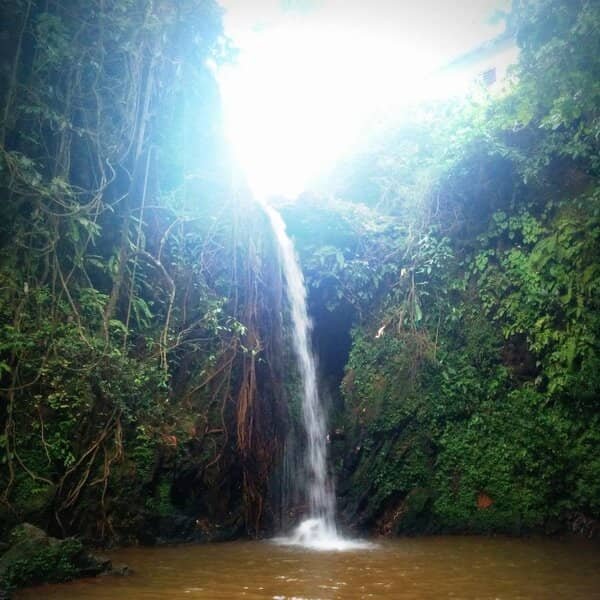
Apsarakonda Waterfalls flows out from behind a hillside temple, and visitors describe the water running down through the roots of a peepal tree before it reaches the pool below. The falls are small, but they’re part of an unusual group of sights within a few minutes’ walk of each other: the waterfall, a temple, a set of hillside caves linked to the Pandavas, a viewpoint garden, and a quiet beach on the Arabian Sea.
Apsarakonda is a village about 7–8 km from Honnavar in Uttara Kannada district, a few kilometres off the coastal highway, NH 66. The name means “pond of angels.” According to local legend, celestial nymphs once came here to bathe.
Apsarakonda Quick Guide
| Detail | Information |
| Location | Apsarakonda (Kelaginuru area), Honnavar taluk, Uttara Kannada district |
| Meaning | “Pond of angels” (apsara = celestial nymph, konda = pond) |
| Also called | Bheema Tirtha, per one local guide |
| Size | Small; about 10 m in one guide, about 50 ft in another |
| Next to | Umamba Maha Ganapati and Ugra Narasimha temple |
| Timings | About 6 AM – 6 PM |
| Entry to the falls | Free (some visitors report villagers asking for ₹5) |
| Parking | About ₹20–₹30 |
| Viewpoint garden / park | About ₹10–₹20 per person |
| Distance from Honnavar | About 7–8 km |
| Distance from Murudeshwar | About 20–28 km |
| Distance from Kumta | About 26–28 km |
| Distance from Gokarna | About 58–70 km |
| Nearest railway station | Honnavar (Konkan Railway), about 8 km |
| Best months | October to February |
How the Site Is Laid Out: Temple, Falls, Caves, Beach
Most of Apsarakonda’s sights are close together, so a visit usually follows this route:
- The temple: the Umamba Maha Ganapati and Ugra Narasimha temple, where a branch of the Ramachandrapura Matha (Hosanagara) is also based.
- The waterfall: just behind the temple. A few steps lead down to a small pool at the base. One visitor noted that you can’t see the falls until you’re on the steps.
- The hill and Pandava Caves: about a 5-minute walk up from the falls. Several small and large caves are cut into the hillside, and according to local belief, the Pandavas stayed here during their exile.
- The viewpoint garden: a park on the clifftop, maintained by the Forest Department, with seating, toilets and wide views over the beach and paddy fields. Entry costs about ₹10–₹20.
- The beach and Kelaginuru lagoon: a path from the garden leads down to the sea, about a 30-minute walk according to one visitor. The pond facing the beach is the one the village is named after.
The Legends Behind the Name
Apsarakonda has its share of local legends:
- Pond of angels: local tradition says celestial nymphs chose this pond to bathe and rest.
- The Pandava connection: the caves on the hill are believed to have sheltered the Pandavas during their Vanavasa (exile). One guide also calls the falls Bheema Tirtha, after the strongest of the five brothers.
- The peepal tree: visitors describe the water running down through the roots of a peepal tree on its way to the pool. It isn’t a legend, but it’s what most people remember about the falls.
Apsarakonda Waterfalls Timings and Charges
| Item | Reported details |
| Opening hours | About 6 AM – 6 PM |
| Entry to the falls | Free; some visitors were asked for ₹5 by villagers without a posted rate |
| Vehicle parking | About ₹20–₹30 for cars |
| Viewpoint garden / park | About ₹10–₹20 per person |
| Beach gate | Reported to close around 6 PM |
Visitors suggest going in the morning or after 3 PM. Midday tends to be the most crowded and the hottest time on the clifftop.
What to Expect From the Falls
Apsarakonda isn’t a big waterfall. It’s a short, gentle cascade into a pool that visitors describe as shallow enough for families and children. A few things to know:
- In the monsoon: the water can be very muddy in early monsoon, according to one visitor who came in July. It clears later in the season.
- After the monsoon: from October onward, the water is clearer and the flow is still steady. That makes it the best time to visit.
- Crowds: it gets busy, because tourists on the Gokarna–Murudeshwar route know it’s an easy place for a dip.
Beach Safety
The beach below Apsarakonda is beautiful and often empty, but don’t assume it’s safe to swim. One homestay owner advised visitors not to enter the sea here, and an older review complained about people drinking and causing a nuisance on the beach.
Enjoy the beach from the sand or from the clifftop garden. If you want to swim in the sea, ask locals about a nearby beach with lifeguards.
How to Reach Apsarakonda Waterfalls
From Honnavar
Head south on NH 66 toward Bhatkal. The turn-off for Apsarakonda comes after about 5 km, and the waterfall, temple and garden are a short way further on. It’s about 7–8 km in total from the Honnavar bus stand.
From Murudeshwar and Bhatkal
Drive north on NH 66 for about 20–28 km from Murudeshwar, or about 35 km from Bhatkal, to the Apsarakonda turn-off.
From Gokarna and Kumta
Go south on NH 66 through Kumta (about 26–28 km from Apsarakonda) and Honnavar. From Gokarna, plan on about 58–70 km, roughly 1.5–2 hours.
From Jog Falls
The drive down from Jog Falls to Honnavar follows the Sharavathi valley and passes the river on the way. Apsarakonda is a short detour after you reach the coast.
By Bus
Local buses run from Honnavar to Apsarakonda village. One visitor took a bus from Kumta to Honnavar, then another bus to Apsarakonda, and walked about 20 minutes from the main road to the falls.
By Train
Honnavar station on the Konkan Railway is about 8 km away. Murudeshwar and Kumta stations are also nearby.
By Air
Mangaluru International Airport is about 176 km from Honnavar, according to one guide. Goa’s airports to the north and Hubballi Airport inland are other options. All involve a long road journey.
Places to Visit Near Apsarakonda
- Honnavar backwaters and mangrove boardwalk: boat rides on the Sharavathi estuary through the mangroves. One visitor paid ₹1,000 for a whole boat for about 1.5 hours.
- Basavaraja Durga: an island fort off Honnavar, reached by boat.
- Kasarkod Eco Beach: a well-kept beach near Honnavar with Blue Flag certification.
- Idagunji Maha Ganapati Temple: a well-known Ganesha temple near Honnavar.
- Murudeshwar: the seaside Shiva temple with its towering statue and gopura, about 20–28 km away.
- Dhareshwar Temple: one of the five Atmalinga temples, on the highway between Honnavar and Kumta.
- Mirjan Fort: a laterite fort near Kumta, a good stop on the way to Gokarna.
- Jog Falls: India’s second-highest plunge waterfall, inland via the Honnavar–Jog road.
Before You Go
- Pack for the water: carry a change of clothes and a towel if you plan to stand under the falls.
- Footwear: wear sandals with grip on the steps and on the wet rocks around the pool.
- Food: there are only small shops near the parking area, so bring snacks.
- Timing: visit the beach and clifftop before 6 PM, when the gates reportedly close.
- Respect the temple: be considerate around the temple and the Matha, and dress modestly.
Apsarakonda Waterfalls FAQs
Q1. Is there an entry fee for Apsarakonda Waterfalls?
A. Apsarakonda Waterfalls is generally free to visit. Visitors may need to pay around ₹20–₹30 for parking and approximately ₹10–₹20 for entry to the viewpoint garden above the beach.
Q2. How far is Apsarakonda from Honnavar?
A. Apsarakonda is approximately 7–8 km from Honnavar bus stand and lies a few kilometres off NH 66. Local buses and autos from Honnavar can be used to reach the area.
Q3. Is it safe to swim at Apsarakonda?
A. The pool below Apsarakonda Waterfalls is generally shallow, but water depth and conditions can change, especially during and after heavy rain. Visitors should follow local safety instructions and avoid entering the water when conditions are unsafe. The nearby beach is separate from the waterfall pool, and entering the sea may be risky depending on currents and weather.