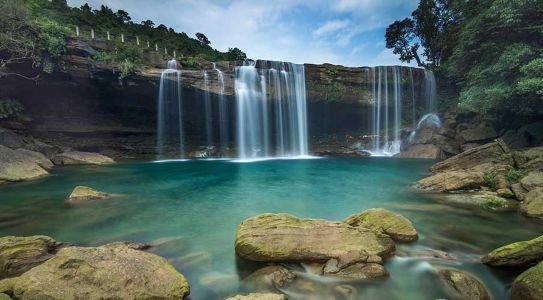
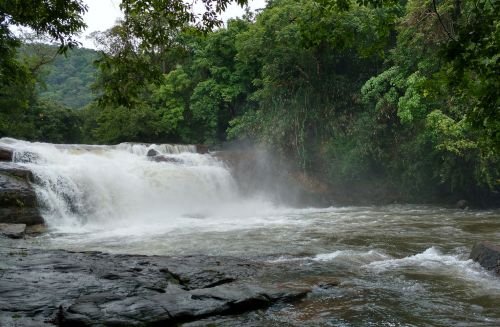
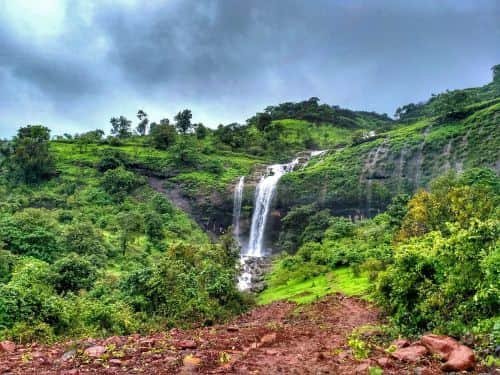
Aharbal is a waterfall where the force of the river matters more than the sheer height of the drop. The Veshaw River rushes through the forested Pir Panjal landscape before plunging about 25 metres into a narrow rocky gorge, producing the roar and spray that earned Aharbal the popular nickname “Niagara Falls of Kashmir.” The official Kulgam district tourism page identifies it as one of the district’s major natural attractions and highlights trekking, photography and fishing opportunities around the area.
Located in Kulgam district of South Kashmir, Aharbal is around 75 km from Srinagar and can be reached through either the Kulgam side or the Shopian side. JKTDC places it about 18 km south of Shopian and 28 km west of Kulgam.
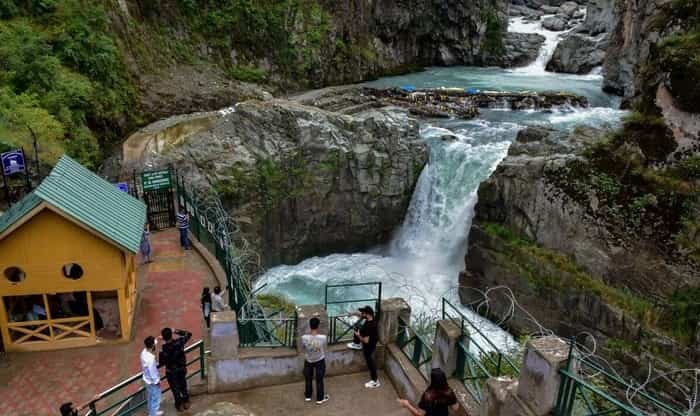
One important point for travellers in 2026 is that access has changed during recent periods. Independent September 2026 reporting still described Aharbal as affected by the tourism-site closures introduced after the April 2025 Pahalgam attack. Therefore, current access should be confirmed with Kulgam district authorities or the Aharbal Development Authority before making the journey.
Aharbal Waterfall: Quick Facts
- Location: Aharbal, Kulgam district, Jammu & Kashmir
- River: Veshaw/Veshu River
- Waterfall drop: About 25 metres at the principal fall
- Distance from Srinagar: About 75 km
- Distance from Kulgam: About 22–28 km, depending on route/reference point
- Distance from Shopian: About 18 km according to JKTDC
- Altitude: About 2,266 metres
- Normal visit: Short walk to developed viewpoints
- Best season: Late spring to autumn when access is permitted
- Entry fee: No dependable current official tariff published
- Nearest airport: Srinagar Airport
- Rail access: Anantnag is identified by Kulgam district as a useful railhead
- 2026 access: Verify before travelling because recent closures have affected Aharbal
What Makes Aharbal Waterfall Special?
Aharbal is formed where the Veshaw River cuts through a rocky gorge in the Pir Panjal foothills. Kulgam district describes a 25-metre fall, while JKTDC provides more detail, describing the river as dropping about 25 metres and then another 7 metres through a narrow gorge of granite boulders.
The surrounding environment adds considerably to the experience. Pine and fir forests cover the valley, while mountain meadows and trekking routes extend upstream.
Unlike a small seasonal cascade, Aharbal is connected to a substantial mountain river. The Veshaw originates in the high Pir Panjal landscape around Kausarnag and flows through Kulgam before eventually joining the Jhelum system.
There are developed viewing areas around the waterfall, so you do not need to undertake a major trek simply to see it.
Aharbal Waterfall Timings
The official Kulgam district and JKTDC pages do not currently publish a precise daily opening-and-closing schedule for the waterfall.
Some current travel listings use approximately 6:00 AM to 6:00 PM, but this should be treated as a practical daylight window rather than a confirmed government gate timing.
When normal tourism access is permitted, a sensible schedule is to arrive between 8 AM and 11 AM and leave before evening.
More importantly, do not rely on ordinary timing information without checking whether Aharbal is currently open. Independent reporting reviewed in September 2026 said the destination had remained among sites affected by tourism closures, although visitor reports have been inconsistent.
If an official closure or checkpoint restriction is in force, do not attempt to enter through another road or trail.
Aharbal Waterfall Entry Fee
There is no clearly published current official entry tariff on the Kulgam district tourism page or JKTDC’s Aharbal information page.
Various non-government sources disagree about whether normal waterfall entry is free or subject to a small charge.
For that reason, it is better to:
- Check the displayed tariff at the authorised entrance.
- Carry some cash.
- Expect possible parking charges.
- Keep any official ticket or receipt.
- Check separately for angling, trekking or other activities.
Fishing is not automatically included in an ordinary sightseeing visit. JKTDC states that an angling permit for the Veshaw can be obtained through the Fisheries Department.
Do You Need to Trek to Aharbal Waterfall?
No long trek is necessary for the basic waterfall visit.
The main attraction has developed visitor infrastructure and fenced terraces/viewing areas. JKTDC specifically notes that the terraces leading towards the falls are fenced, although the surfaces can still be slippery.
Aharbal becomes a trekking destination if you continue farther into the mountains.
The most important longer route is towards Kausarnag Lake, passing through mountain meadows including Kungwattan. Kulgam district describes the Aharbal–Kausarnag route via Kungwattan and Mahinag as a multi-day trek.
Do not confuse this with the ordinary waterfall visit. Seeing Aharbal itself does not require a multi-day hike.
Best Time to Visit Aharbal Waterfall
May to June
Late spring and early summer can produce particularly powerful flow because of mountain snowmelt.
The surrounding forest and meadows are also green, making this one of the most attractive periods when access is open.
July to August
The waterfall remains impressive, but rain can make paths and viewpoints slippery. Road conditions can also change after bad weather.
September to October
This is an excellent period for clearer skies and autumn scenery. Water flow may be lower than during peak snowmelt, but photography conditions can be particularly attractive.
Winter
Aharbal receives snow and the landscape can be beautiful, but winter should not be treated like a normal summer sightseeing trip. Ice, snow and road conditions can complicate access.
For a first visit, May–June or September–October provides a useful balance, subject to current tourism and security access.
How to Reach Aharbal Waterfall
From Srinagar
JKTDC places Aharbal approximately 75 km south of Srinagar.
There are two broad approaches.
One route runs through South Kashmir towards Kulgam:
Srinagar → Kulgam → Nehama/D.H. Pora side → Manzgam/Wattoo → Aharbal
Another popular approach is through:
Srinagar → Pulwama → Shopian → Aharbal
Older government and tourism descriptions place the journey at under three hours in normal conditions, but current travel time depends on traffic, checkpoints, weather and road conditions.
A private taxi is the easiest option for a day trip.
From Kulgam
Kulgam is the nearest district headquarters.
Official sources give somewhat different distances depending on the route and reference point. The district page describes Aharbal as roughly 22 km from Kulgam, while JKTDC uses about 28 km west of Kulgam.
Allow around an hour rather than planning purely from the kilometre figure.
From Shopian
JKTDC places Aharbal about 18 km south of Shopian.
This makes Shopian another practical base, particularly if you want to travel through its apple-growing countryside.
The broad route is:
Shopian → Aharbal Road → Aharbal
By Bus
The Kulgam district administration confirms that regular buses connect Srinagar with Kulgam. From Kulgam, travellers can continue towards Aharbal using local road transport when the destination is open.
For sightseeing, however, a hired taxi provides much greater flexibility.
Public transport may require changes, and the final return service should always be confirmed before leaving Kulgam or Shopian.
By Train
The Kulgam district administration identifies Anantnag as the nearest useful railhead, stating that Kulgam is about 19 km from Anantnag Railway Station.
From Anantnag, continue by road towards Kulgam and then Aharbal.
Because railway operations and service patterns in Kashmir can change, check the current train schedule rather than planning solely from older route guides.
By Air
The nearest airport is Srinagar Airport (SXR).
Kulgam district states that Kulgam is approximately 68 km from Srinagar, after which the journey continues west towards Aharbal.
For visitors flying into Kashmir, the simplest plan is generally:
Srinagar Airport → Srinagar or South Kashmir stay → Aharbal by taxi
Avoid trying to combine a late flight arrival with an evening trip to the waterfall.
Nearby Places to Visit
Kungwattan Meadow
Kungwattan is one of the most natural additions to an Aharbal trip for travellers interested in walking.
JKTDC identifies the alpine meadow as part of the trekking route towards Kausarnag, while Kulgam district highlights the broader Aharbal–Kungwattan–Mahinag–Kausarnag trekking corridor.
Going substantially beyond the normal visitor area requires more preparation than a waterfall day trip.
Kausarnag Lake
Kausarnag is a high-altitude, snow-fed lake in the Pir Panjal and the source area of the Veshaw River.
Kulgam district describes the route from Aharbal via Kungwattan and Mahinag as a multi-day trek, so Kausarnag should not be listed as a quick nearby sightseeing stop.
Treat it as a separate trekking expedition requiring current permission, weather information and suitable equipment.
Chiranbal
Chiranbal is a large montane meadow in Kulgam district, around 6 km from Manzgam according to the district tourism page. It is divided locally into smaller and larger meadow areas and is crossed by the Zajinar River.
It works well for travellers interested in less commercial meadow scenery.
Shopian
Shopian is a convenient stop when approaching Aharbal from the western route. It is especially known for its extensive apple-growing landscape.
Because it lies roughly 18 km from Aharbal according to JKTDC, it can easily be included in the same road journey.
Kulgam
Kulgam town is useful for food, supplies and transport before continuing towards Aharbal. It also provides access to several lesser-known meadows, springs and religious sites across the district.
A simple day plan, when Aharbal is officially open, is:
Srinagar → Shopian → Aharbal Waterfall → Shopian → Srinagar
Safety at Aharbal Waterfall
The most dangerous feature at Aharbal is the same thing that makes it impressive: the powerful Veshaw River entering a narrow gorge.
JKTDC specifically warns visitors to take care on the terraces despite the presence of fencing.
Keep these precautions in mind:
- Stay behind railings and barriers.
- Do not climb onto wet rocks for photographs.
- Do not approach the waterfall lip.
- Never jump into the plunge pool.
- Avoid swimming near the waterfall.
- Supervise children closely.
- Wear footwear with strong grip.
- Keep away from the river during unusually high flow.
- Do not enter closed trekking routes.
- Carry warm clothing even in summer.
- Check weather and road conditions before departure.
- Follow police and local authority instructions.
- Carry all rubbish back with you.
Aharbal is a powerful river waterfall, not a recreational swimming pool.
Important 2026 Access Note
Before planning Aharbal as a guaranteed day trip, verify its current operational status.
The official Kulgam tourism pages continue to list Aharbal as a major attraction, but they do not provide a current reopening notice. Meanwhile, an independent Kashmir travel guide updated in September 2026 reported that Aharbal had remained among tourism sites closed after the April 2025 Pahalgam attack and that no confirmed reopening had been found by its latest review.
There are also June 2026 visitor reports describing trips to the area, which means real-world access information has not always been consistent.
For readers, the practical rule is simple: confirm locally before leaving Srinagar, Kulgam or Shopian and follow whatever restriction is in force that day.
Aharbal Waterfall FAQs
Q1. What are the timings of Aharbal Waterfall?
A. The official Kulgam district and JKTDC pages do not currently provide precise daily timings for Aharbal Waterfall. Some travel sources mention approximately 6:00 AM to 6:00 PM, but these timings should be treated as indicative. Visitors should also confirm whether Aharbal is currently open before travelling, as access restrictions have affected the destination.
Q2. How far is Aharbal Waterfall from Srinagar?
A. Aharbal Waterfall is approximately 75 km south of Srinagar, according to JKTDC. The road journey generally takes a few hours, depending on the route through Kulgam or Shopian, traffic, and current road conditions.
Q3. How high is Aharbal Waterfall?
A. The main Aharbal Waterfall is approximately 25 metres high. JKTDC describes a 25-metre drop followed by another roughly 7-metre drop through the rocky gorge.
Q4. Is trekking required to see Aharbal Waterfall?
A. No. The main waterfall can be viewed from developed viewpoints without undertaking a long trek. Longer trekking routes begin if you continue towards destinations such as Kungwattan and Kausarnag.
Q5. Can Aharbal Waterfall be visited as a day trip from Srinagar?
A. Yes, when the destination is officially open. At roughly 75 km from Srinagar, Aharbal can normally be covered as a full-day road trip. Start early, allow enough time to explore the waterfall and surrounding forests, and plan to return before evening. Check the latest access status before departure because restrictions have occurred recently.