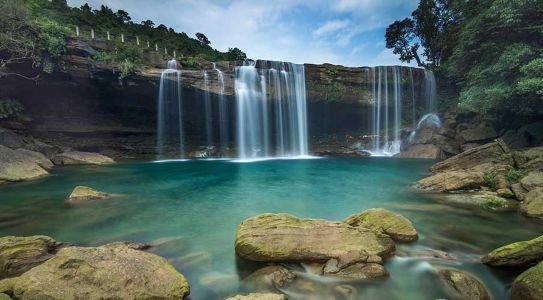
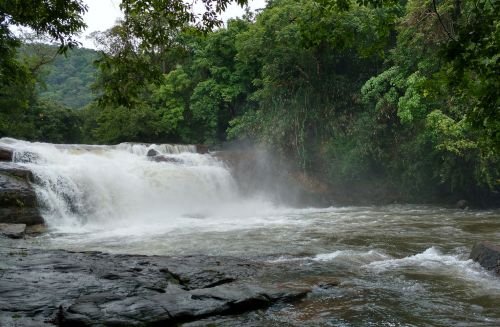
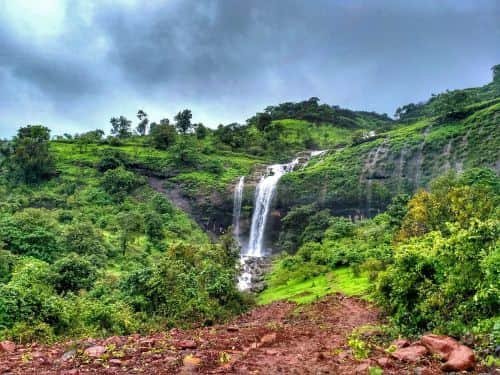
Tilari is one of those Western Ghats destinations where the journey is almost as important as the waterfall. Dense forest, steep ghat roads, the large Tilari reservoir and seasonal streams define this Maharashtra–Goa–Karnataka border landscape. However, visitors should know that the name “Tilari Waterfall” is used for more than one waterfall or cascade around the wider Tilari region, and some mapped locations extend towards the Belagavi side of the forest.
For travellers exploring Sindhudurg, the main base is the Tilari–Dodamarg region. Government tourism planning documents identify Dodamarg as a forest-rich part of Sindhudurg with waterfalls, Tilari Dam backwaters and protected wildlife habitat. The Tilari River itself originates around Tilari Nagar in Dodamarg and flows through Maharashtra towards Goa.
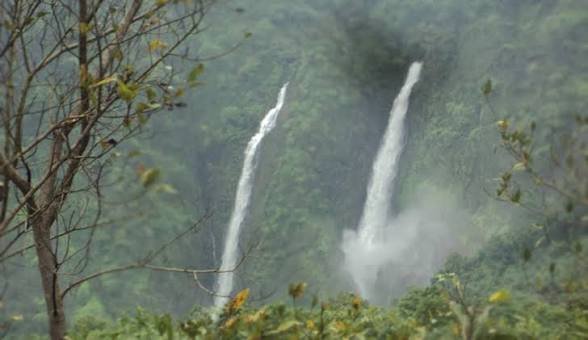
Tilari Waterfall: Quick Facts
- Region: Tilari–Dodamarg, Western Ghats
- District: Sindhudurg, Maharashtra, for the Dodamarg/Tilari tourism region
- Landscape: Dense forest, valleys, reservoir and seasonal waterfalls
- Timings: No dependable single official waterfall timetable
- Recommended visit: Daylight hours, preferably morning to mid-afternoon
- Entry: Depends on the exact waterfall/forest access point
- Trekking: Short to moderate forest walking depending on the selected cascade
- Best season: July to October
- Best balance of flow and accessibility: August to October
- Nearest useful town: Dodamarg
- Major nearby transport bases: Sawantwadi, Belagavi and North Goa
- Main caution: Verify the exact waterfall pin before travelling
Understanding the Tilari Waterfall Location
This is important because Tilari is not simply one roadside waterfall.
The Tilari landscape crosses the border region between Sindhudurg, Kolhapur/Chandgad, Belagavi and Goa. The Government of Goa’s Water Resources Department confirms that the Tilari irrigation project is a joint Maharashtra–Goa project, with the main dam and associated infrastructure in Maharashtra and irrigation benefits extending into Goa.
Meanwhile, Maharashtra tourism planning material identifies the Dodamarg side for attractions such as Vajrat Waterfalls, Mathewada Waterfalls, Baba Waterfalls, Mangeli Waterfalls and Tilari Dam backwaters.
A separate mapped attraction called “Tilari Waterfalls” is also associated with the forest towards the Belagavi border. In April 2026, a fatal drowning was reported at Tilari Falls in the Dhamane Reserve Forest of Belagavi, where visitors were required to have entry passes and an authorised guide.
Therefore, do not assume that every online photo, review or map pin labelled “Tilari Waterfall” refers to exactly the same place.
Tilari Waterfall Timings
There is no single reliable Maharashtra Tourism timetable for a waterfall officially named Tilari Waterfall in the Dodamarg region.
For the forest waterfall experience, a practical plan is to visit during daylight and begin your outing in the morning.
A sensible window is:
Around 8:00 AM to 4:00 PM
This is a recommended travel window, not an official opening schedule.
If your map pin leads to a Forest Department-managed waterfall or trekking zone on the Belagavi side, access rules can be much stricter. The April 2026 incident report confirms that the visitors there had obtained valid entry passes and an authorised guide, indicating managed forest access.
Always check which Tilari waterfall you are visiting before relying on timings found online.
Tilari Waterfall Entry Fee
There is also no universal Tilari Waterfall entry fee.
Older visitor information for one mapped Tilari Falls location reports charges around ₹250 per person, with forest access and a guide, but those reports are several years old and should not be treated as a current tariff.
Charges can depend on:
- Forest entry
- Guide requirement
- Parking
- Exact waterfall
- Trekking route
- Seasonal restrictions
For the Sindhudurg/Dodamarg side, check locally at the relevant forest or tourism access point instead of assuming that an online price applies everywhere in Tilari.
What Is the Tilari Waterfall Experience Like?
The attraction of Tilari comes from the entire Western Ghats environment.
The surrounding forests contain moist deciduous and semi-evergreen vegetation, while government conservation material records wildlife including gaur, sambar, barking deer, leopard, dhole, sloth bear, tiger and Asian elephant in the wider Tilari landscape.
This is therefore genuine wildlife habitat rather than simply a picnic area.
Depending on the waterfall you choose, expect:
- Narrow forest roads
- Mud during monsoon
- Short forest trails
- Rocky surfaces
- Stream crossings
- Weak or absent mobile network
- Limited shops
- Sudden changes in weather
Carry drinking water and basic food rather than depending on shops near the waterfall.
Best Time to Visit Tilari Waterfall
July to September
This is the most dramatic season.
Heavy monsoon rain activates seasonal waterfalls throughout the Western Ghats, fills the Tilari reservoir and turns the forest intensely green.
It is also the most difficult period for driving and trekking. Ghat roads can become slippery, visibility can fall rapidly in fog and streams can rise without much warning.
September to October
For most visitors, this is the best balance.
The waterfalls generally retain good post-monsoon flow while continuous heavy rainfall becomes less frequent. Forests remain green and the reservoir is usually impressive.
November to February
The Tilari region remains attractive for forests, reservoir views and wildlife-oriented travel, but seasonal waterfalls gradually weaken.
March to May
Do not plan a long journey specifically for a seasonal Tilari cascade without checking current flow.
The reservoir and forest landscape can still be visited, but the waterfall experience may be very different from monsoon photographs.
How to Reach Tilari Waterfall
From Dodamarg
Dodamarg is the most useful base if your objective is the Sindhudurg side of Tilari.
Travel east from Dodamarg towards the Tilari reservoir and ghat region. The exact final road depends on whether you are visiting the dam, a viewpoint, Mangeli or another waterfall in the forest belt.
The official Sindhudurg tourism planning material identifies Tilari Dam backwaters and several Dodamarg waterfalls as attractions in this part of the district.
A private car or motorcycle is considerably more practical than public transport.
From Sawantwadi
A broad route is:
Sawantwadi → Banda/Dodamarg → Tilari region
Government conservation information places the wider Tilari Conservation Reserve about 73 km by road from Sawantwadi, although individual attractions on the Dodamarg side can be closer.
Do not use the conservation-reserve distance as the exact distance to every Tilari waterfall.
From Goa
Dodamarg sits close to Goa, making Tilari a possible inland nature trip for visitors staying in North Goa.
The local Dodamarg tourism portal describes the region as roughly 30–40 minutes from Goa, although actual travel time to a specific waterfall can be substantially longer once the forest and ghat roads are included.
A practical broad route from North Goa is:
North Goa → Bicholim/Assonora side → Dodamarg → Tilari
The exact route varies with your starting point.
From Belagavi
Belagavi is another important gateway to the Tilari landscape.
Government conservation material gives approximately 87 km by road from Belagavi to the Tilari Conservation Reserve region.
However, the mapped Tilari Falls in Dhamane Reserve Forest is on the Belagavi side and is a different access situation. A 2026 report placed that waterfall approximately 65 km from Belagavi city.
This is another reason to verify your exact map destination before starting.
By Bus
Public buses can get you to towns such as Dodamarg, Sawantwadi or Belagavi, but they are not ideal for reaching remote waterfall trailheads.
For the final section, you may need:
- Local taxi
- Hired jeep
- Private car
- Motorcycle
- Forest-authorised transport where applicable
Confirm your return transport before entering a remote forest area.
By Train
For the Sindhudurg side, Sawantwadi Road Railway Station is one of the useful Konkan Railway gateways.
Government conservation information identifies Niravade/Sawantwadi as a rail approach to the wider Tilari landscape, while Belagavi is another option from the eastern side.
From the station, continue by road towards Dodamarg and the Tilari region.
By Air
Airport choice depends strongly on which side of Tilari you are visiting.
For the Dodamarg/Sindhudurg side, Manohar International Airport at Mopa, Goa is geographically convenient for many travellers.
For visitors approaching from Karnataka, Belagavi Airport is another practical option.
From either airport, the final journey requires road transport.
Nearby Places to Visit
Tilari Dam and Backwaters
Tilari Dam is the most natural attraction to combine with a waterfall trip. The dam forms part of the joint Maharashtra–Goa irrigation project, and government records confirm that its main headworks are in Maharashtra.
The reservoir is particularly attractive during and immediately after monsoon.
Mangeli Waterfall
Mangeli is one of the better-known waterfalls in Dodamarg taluka. The local tourism portal places Mangeli at the eastern end of Dodamarg near the Karnataka border.
It can be a better-defined destination than searching broadly for “Tilari Waterfall.”
Pargad Fort
Pargad Fort lies in the wider border region and provides a historical alternative to the area’s waterfalls and reservoirs. It is especially suitable for travellers interested in combining nature with Maratha history.
Tilari Ghat Viewpoints
The Tilari Ghat road offers expansive Western Ghats views, particularly when clouds lift during the monsoon.
Drive cautiously. The road includes steep and narrow sections, and past travellers have specifically warned against tackling the ghat after dark during difficult weather.
Sawantwadi
Sawantwadi is a useful larger town for accommodation, food and supplies. Maharashtra Tourism highlights the town for its traditional wooden toys and historic palace.
Important Safety Information
Tilari should be treated more seriously than an ordinary roadside waterfall.
In April 2026, a 26-year-old visitor drowned at Tilari Falls in Dhamane Reserve Forest after entering the water without a life jacket. The group had valid passes and an authorised guide, but rescue efforts were complicated by darkness.
Following the incident, concerns were also raised about inadequate safety infrastructure, including limited lighting, fencing, mobile connectivity and rescue equipment at the forest tourism location.
For any Tilari waterfall:
- Do not swim in an unfamiliar pool.
- Never jump from rocks.
- Wear a life jacket where one is required.
- Use an authorised guide where forest rules require one.
- Do not enter after closing time.
- Avoid returning through the forest after dark.
- Carry sufficient drinking water.
- Do not depend on mobile connectivity.
- Stay on recognised trails.
- Never approach wild animals.
- Drive slowly on Tilari Ghat.
- Avoid stream crossings during extreme rainfall.
- Follow Forest Department closures without attempting alternative routes.
The wider Tilari forest supports large wildlife, including elephants and major carnivores, so wandering away from recognised visitor routes is particularly unwise.
Tilari Waterfall FAQs
Q1. Where is Tilari Waterfall located?
A: The wider Tilari tourism region lies around Dodamarg in Sindhudurg district, near the Maharashtra–Goa–Karnataka border. However, the name “Tilari Waterfall” is also used for a Forest Department-managed waterfall on the Belagavi side. Verify the exact map pin before travelling.
Q2. What are the timings of Tilari Waterfall?
A: There is no single verified Maharashtra Tourism timetable covering every waterfall called Tilari. For the Sindhudurg forest region, plan a daylight visit, preferably around 8 AM–4 PM. Forest-managed locations may have their own entry times and permit rules.
Q3. What is the best time to visit Tilari Waterfall?
A: July to October gives the best chance of seeing active waterfalls and green Western Ghats scenery. September and October usually provide a better balance between good water flow and easier travel than peak monsoon.
Q4. Is swimming allowed at Tilari Waterfall?
A: Do not assume so. Older visitor reports say swimming was prohibited at one Tilari Falls location, and a fatal drowning occurred at the Dhamane Reserve Forest waterfall in April 2026. Follow the instructions of Forest Department staff and guides on the day of your visit.
Q5. Which places can be combined with Tilari?
A: For a Sindhudurg-side trip, the most logical attractions are Tilari Dam and backwaters, Mangeli Waterfall, Tilari Ghat viewpoints and Pargad Fort. Dodamarg tourism information specifically highlights Tilari Dam, Mangeli and the surrounding Western Ghats landscape.