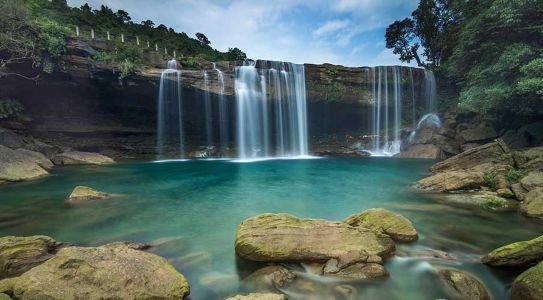
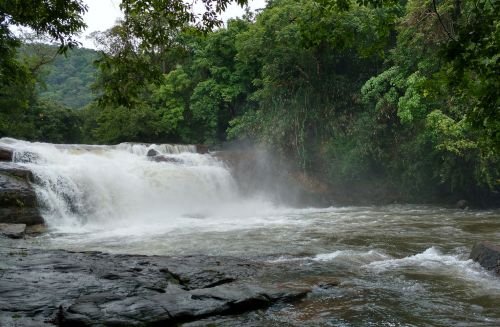
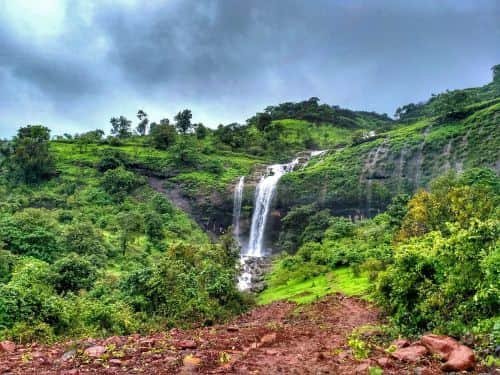
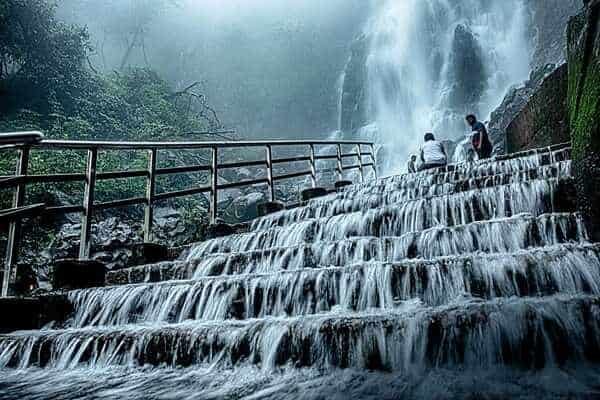
Amboli Waterfall is the best-known sight in a hill village that gets roughly 7,000–7,500 mm of rain a year, among the highest totals in Maharashtra. The main falls drop down a forested rock face right next to the ghat road, a few kilometres from Amboli bus stand in Sindhudurg district. In peak monsoon, cars back up along the road while people climb the stone steps to stand in the spray.
Amboli is about 30 km uphill from Sawantwadi, at roughly 690 metres. The waterfall is the main attraction, but the area also has several viewpoints, a temple at the source of a river, and a forest that biologists value for its wildlife.
Amboli Falls: Need-to-Know
| Detail | Information |
| Location | Amboli, Sawantwadi taluka, Sindhudurg district, Maharashtra |
| Setting | Beside the Belagavi–Sawantwadi ghat road |
| Altitude of Amboli | About 690 m |
| Annual rainfall | About 7,000–7,500 mm |
| Distance from Amboli bus stand | About 2–4 km |
| Height | Sources vary: about 60 ft in one guide, about 70 m in another |
| Viewing from the road | Free |
| Climbing the steps | About ₹10–₹20 per person |
| Monsoon closing time | Main falls cleared at 5 PM under local rules (2025 order) |
| Distance from Sawantwadi | About 27–32 km |
| Distance from Belagavi | About 68–70 km |
| Distance from Kolhapur | About 105–129 km depending on route |
| Nearest railway station | Sawantwadi Road (about 28 km) |
| Nearest airports | Goa (Mopa or Dabolim), Belagavi |
| Best months | July to early October |
Why Amboli Is Called the Cherrapunji of Maharashtra
Few hill stations get this much rain. Amboli sits on the last ridge of the Sahyadris before the land drops toward the Konkan coast and Goa. Monsoon clouds coming in from the sea hit this ridge first, which is why Amboli gets the nickname “Cherrapunji of Maharashtra.”
All that rain feeds hundreds of seasonal streams, and the main waterfall is simply the largest of them next to the road. The same wet forest supports unusual wildlife. A small endemic frog, the Amboli bush frog, is named after the village. Researchers have also documented the freshwater fish of the Hiranyakeshi River, which begins in a cave just outside Amboli.
Monsoon Rules at the Main Falls
In recent years, large monsoon crowds have led local authorities to introduce stricter rules. Here’s what has been reported:
- Evening closure: under rules agreed by the Amboli Gram Panchayat and Sawantwadi Police, visitors have to leave the main falls by 5 PM in the monsoon, and nearby food stalls close at the same time.
- Alcohol and behaviour checks: police have targeted drunken visitors, especially around the Hiranyakeshi temple. In past monsoons, weekend access there was restricted, with shared rickshaws arranged for people going for darshan.
- Parking: a designated parking area near the Amboli bus stand was set up to reduce traffic jams beside the falls.
- Closure during heavy rain: on 5–6 August 2026, the Forest Department temporarily closed the main waterfall area because the water was rising dangerously. Guards were posted to stop people entering, but visitors could still watch the falls from the roadside.
We couldn’t confirm whether the 5 PM rule is in force for October 2026. Plan to finish at the main falls by late afternoon anyway.
Amboli Waterfall Timings and Fees
| Item | Reported details |
| Roadside viewing | Free; no fixed hours, but go in daylight |
| Climbing the steps for a close view | About ₹10 per person in most sources; ₹20 in one recent guide |
| Monsoon cut-off | About 5 PM (local rule from 2025) |
| Other waterfalls nearby | Some charge separately, e.g. about ₹20 at the “Maya” falls a little further along the road |
| Changing rooms and food stalls | Available near the main falls in season |
The steps were added some years ago, so the climb is now manageable for most people, including fit older visitors. They stay wet throughout the monsoon, though, so wear shoes with good grip.
What Amboli Looks Like in October
By early October the heaviest rain has passed, and conditions change quickly from week to week.
- Early to mid-October: the main falls are still flowing well, with fewer crowds and clearer skies. Several visitors say mid-October is about the latest time to see Amboli at its best.
- November: the flow is noticeably smaller, but the viewpoints are pleasant and green.
- December to May: the main falls shrink to a trickle or dry up completely. One visitor in late January found the falls dry. The viewpoints and forest are still worth visiting, but the waterfall isn’t.
- June to September: maximum flow and mist. Expect the biggest crowds, traffic jams on weekends, and possible closures during heavy rain.
Roads Into Amboli
From Sawantwadi and Goa
Amboli is about 27–32 km uphill from Sawantwadi. From north Goa, add roughly 30–35 km to reach Sawantwadi. Panaji is about 80 km from Amboli. On the Sawantwadi side, the main falls come before you reach Amboli village.
From Belagavi
Drive west on the Belagavi–Sawantwadi road, about 68–70 km, roughly 1.5–2 hours. People from Belagavi often drive over for the day during the monsoon.
From Kolhapur, Pune and Mumbai
The usual route from Kolhapur goes through Gadhinglaj and Ajara, about 105–129 km depending on which roads you take. From Pune (about 340–350 km) or Mumbai (about 490 km), drive down via Kolhapur, or travel by train along the Konkan coast and come up from Sawantwadi.
By Train
Sawantwadi Road station on the Konkan Railway is about 28 km away. Trains from Mumbai and Goa stop here, and taxis can take you up to Amboli. Kudal (about 47 km) and Belagavi are other options. Buses run to Amboli from Kolhapur and Sangli via Gadhinglaj and Ajara.
By Air
Goa has two airports. Mopa (Manohar International) in north Goa is the closer one, and Dabolim is about 120 km away. Belagavi Airport works well for travellers coming from the Karnataka side.
The Amboli Viewpoint Circuit
Most of these spots are within about 10 km of the main falls. Distances are approximate and based on reported figures from Amboli village or the falls.
- Amboli Sunset Point: about 2 km away. A good place to end the day if the clouds clear.
- Shirgaonkar Point: about 3 km away. A cliff-edge view over the Konkan valley.
- Hiranyakeshi Temple and cave: about 5 km away. A Shiva shrine at the cave where the Hiranyakeshi River Dress respectfully, and expect monsoon access rules on busy weekends.
- Mahadevgad Point: a ridge viewpoint linked to an old fort site, with views over the forest.
- Nangarta Falls: a narrow, roaring waterfall that drops into a gorge, popular for photographs.
- Kavlesad Point: about 10 km away. Famous in the monsoon for its “reverse waterfall,” where strong wind pushes the falling water back up into the air.
- Kavleshet Point: right next to Kavlesad, with more valley views and seasonal waterfalls.
- Sawantwadi: about 30 km down the hill. Known for its lake, palace and painted wooden toys, and an easy stop on the way to the Sindhudurg coast.
Practical Tips for Amboli
- Rain gear: pack a raincoat rather than an umbrella. Wind on the viewpoints makes umbrellas almost useless.
- Change of clothes: carry dry clothes in a waterproof bag if you plan to get under the falls.
- Monkeys: they’re common around the stalls, so keep food packed away.
- Driving: the ghat road is narrow, and mist can reduce visibility to a few metres. Drive slowly with headlights on.
- Accommodation: book ahead for monsoon weekends. Amboli has a limited number of hotels.
Amboli Waterfall FAQs
Q1. Is there an entry fee for Amboli Waterfall?
A. Viewing Amboli Waterfall from the roadside is generally free. Accessing the steps for a closer view may cost around ₹10–₹20 per person, depending on the applicable local charges.
Q2. Is Amboli Waterfall open in October 2026?
A. Yes. Amboli Waterfall is generally accessible in October 2026, and the falls can still have good water flow in early October. However, authorities may temporarily restrict access during heavy rain or unsafe conditions. During the monsoon, recent local rules have also required visitors to leave the area by around 5 PM.
Q3. How far is Amboli Waterfall from Sawantwadi?
A. Amboli Waterfall is approximately 27–32 km from Sawantwadi via the Belagavi–Sawantwadi road. When travelling uphill from Sawantwadi, the main waterfall is reached shortly before Amboli village.