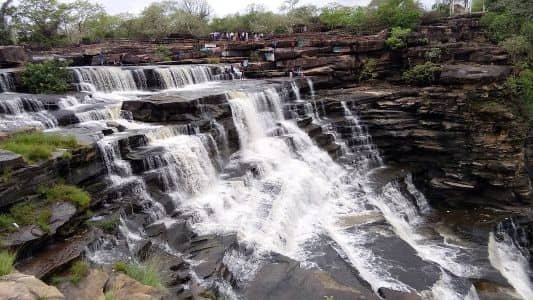
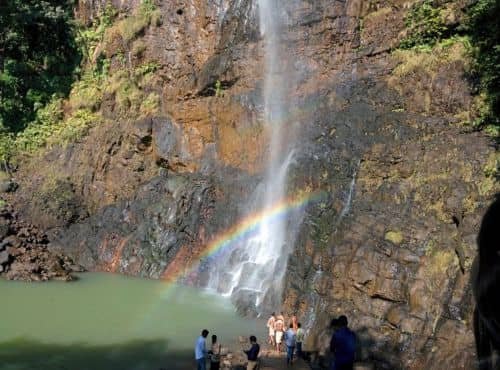
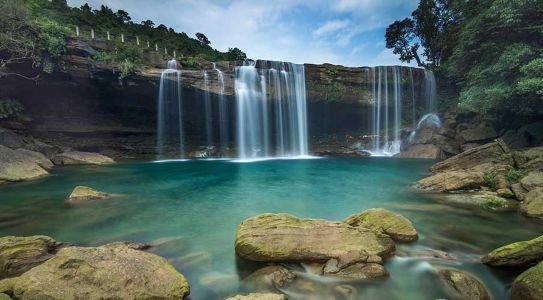
Tutla Bhawani Waterfall combines two experiences that are rarely separated here: a forest waterfall and an old Shakti shrine. The water descends between two high hills into a narrow green valley, while the Tutla Bhawani Temple stands beside the cascade. The Kachhuar River flows through the valley, giving the entire area a particularly dramatic appearance during the rainy season.
Also known as Tutrahi or Titula Dham, Tutla Bhawani is near Tilouthu (Tilauthu) in Rohtas district, Bihar. The Rohtas district administration places Tutrahi about 8 km south-west of Tilouthu, while Bihar Tourism describes the site as approximately 20 km south-west of Dehri-on-Sone. The Forest Department has developed it as an eco-tourism destination with road access, a suspension bridge and e-rickshaw facilities.

Tutla Bhawani Waterfall: Quick Facts
- Location: Near Tilouthu, Rohtas district, Bihar
- Also known as: Tutrahi, Tutula Bhawani and Titula Dham
- Distance from Tilouthu: about 8 km
- Distance from Dehri-on-Sone: about 20 km
- Waterfall height: Rohtas district administration gives approximately 180 ft
- River: Kachhuar River flows through the valley
- Timings: 6 AM to 6 PM
- Entry fee: free
- Best time: Bihar Tourism recommends June to August
- Main attractions: waterfall, Tutla Bhawani Temple, green valley and forest landscape
- Facilities: road access, suspension bridge and e-rickshaw service
What Makes Tutla Bhawani Special?
Tutla Bhawani is not simply a picnic waterfall. Its natural landscape and religious importance are closely connected.
Two high hills converge around a roughly mile-long valley. The Rohtas district administration says the valley is about 300 metres wide towards the east but narrows to around 50 metres towards the waterfall in the west. It gives the waterfall’s height as approximately 180 feet.
Beside the waterfall is a platform containing an image of Goddess Jagaddhatri Mahishasuramardini Durga, associated with the Tutla Bhawani shrine. The site also contains a historical rock inscription connected with Nayak Pratap Dhaval Dev and dated to 1158 CE.
This combination of waterfall, temple, archaeology and forest scenery makes Tutla Bhawani suitable for both nature visitors and pilgrims.
Tutla Bhawani Waterfall Timings and Entry Fee
Bihar Tourism currently lists the official visiting hours for Tutla Bhawani Waterfall as 6 AM to 6 PM, with free entry.
An early-morning visit is still preferable, especially during weekends and the monsoon. It gives you more time to explore the temple and waterfall before crowds increase.
The site has been developed by the Forest Department as an eco-tourism destination. According to the Rohtas district administration, facilities now include a road, suspension bridge and e-rickshaw service.
Although general entry is free, carry some cash for transport, parking, food or other locally operated services.
Best Time to Visit Tutla Bhawani Waterfall
Bihar Tourism specifically recommends June to August, when rainfall produces stronger water flow and turns the valley intensely green.
However, the strongest waterfall does not always mean the safest visit. During periods of very heavy rainfall, rocks become slippery and water levels can rise quickly.
For many visitors, July to September offers attractive scenery, subject to local weather and access conditions. If there has been extreme rainfall in the Kaimur hills, check conditions locally before travelling.
Winter is more comfortable for exploring the temple and valley, but the waterfall is likely to carry less water than during the monsoon.
How to Reach Tutla Bhawani Waterfall
From Dehri-on-Sone
Tutla Bhawani is approximately 20 km south-west of Dehri-on-Sone. Travel towards Tilouthu and then follow the local road towards Tutrahi/Tutla Bhawani.
A private vehicle or hired taxi provides the most convenient option, particularly for families.
From Tilouthu
Tilouthu is the closest useful town. The Rohtas district administration places Tutrahi approximately 8 km south-west of Tilouthu in the hill valley.
The Forest Department’s improvements have made the final approach easier than it once was, and e-rickshaws are among the facilities mentioned by the district administration.
From Sasaram
Bihar Tourism lists private taxis and buses from Sasaram as transport options for reaching Tutla Bhawani. If you are staying in Sasaram, the waterfall can be included in a full-day Rohtas sightseeing trip.
By Train
The Rohtas district administration identifies Sasaram railway station as the nearest railway station for the destination. Dehri-on-Sone is another important rail-connected town in the wider area and is geographically convenient for reaching Tilouthu.
By Air
The district administration identifies Gaya, Varanasi and Patna as the nearest airport options. None is immediately beside the waterfall, so visitors arriving by air will need a substantial onward road journey.
Nearby Places to Visit
Tutla Bhawani can form part of a wider trip through Rohtas and the Kaimur Hills.
- Indrapuri Dam: A major dam near Dehri-on-Sone and one of the easier attractions to combine with Tutla Bhawani.
- Kashish Waterfall: Another impressive waterfall in the Kaimur Hills around Amjhor. The Rohtas Forest Division includes Tutla Bhawani and Kashish in its eastern tourist circuit.
- Rohtasgarh Fort: A historically important hill fort and one of the major heritage attractions of Rohtas district.
- Sher Shah Suri Tomb: Located in Sasaram and particularly convenient if your journey begins or ends there.
- Manjhar Kund and Dhuan Kund: Twin waterfall attractions around 10 km from Sasaram that are especially popular during the monsoon.
- Kaimur Hills: The wider hill landscape contains forests, streams and numerous seasonal waterfalls.
Safety and Visitor Tips
Tutla Bhawani’s development as an eco-tourism destination makes access easier, but it remains a natural waterfall surrounded by hills and forest.
- Stay within developed visitor areas and recognised paths.
- Avoid deep water; Bihar Tourism specifically advises visitors to stay away from deeper sections.
- Don’t climb slippery rocks beside or beneath the waterfall.
- Avoid visiting during extreme rainfall or flooding.
- Keep children closely supervised near flowing water.
- Respect the temple and dress appropriately around the shrine.
- Do not leave plastic bottles, food packets or other rubbish in the valley.
- Avoid disturbing wildlife or entering isolated forest areas.
- Plan to leave well before the official 6 PM closing time.
Tutla Bhawani Waterfall FAQs
Q1. What are the timings of Tutla Bhawani Waterfall?
A. Bihar Tourism currently lists Tutla Bhawani Waterfall as open from 6 AM to 6 PM.
Q2. Is there an entry fee for Tutla Bhawani Waterfall?
A. Bihar Tourism currently lists free entry for the waterfall. Separate charges may still apply for transport, parking, or locally operated services.
Q3. How far is Tutla Bhawani from Dehri-on-Sone?
A. Bihar Tourism places Tutla Bhawani approximately 20 km south-west of Dehri-on-Sone. It is located near Tilouthu in Rohtas district.
Q4. What is the best time to visit Tutla Bhawani Waterfall?
A. Bihar Tourism recommends June to August. The monsoon brings stronger waterfall flow and greener surroundings, although visitors should avoid periods of dangerous heavy rainfall.
Q5. Is Tutla Bhawani only a waterfall?
A. No. The destination also includes the Tutla Bhawani Temple, an image of Goddess Jagaddhatri Mahishasuramardini Durga, and a historic inscription dated to 1158 CE, making it both a natural and religious attraction.