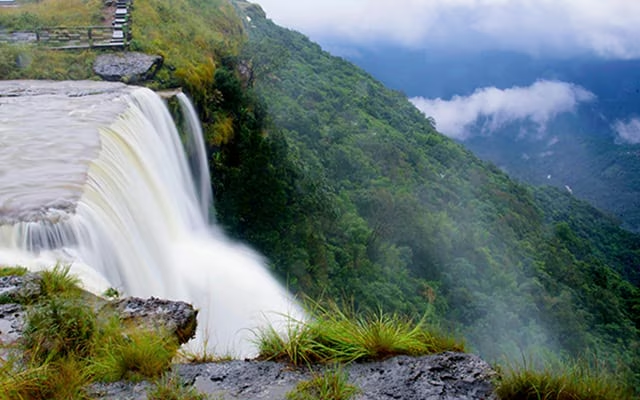
Seven Sisters Waterfall can look like seven white streams pouring off a limestone cliff, or like nothing at all if a cloud drifts across the valley at the wrong moment. Officially called Nohsngithiang Falls, and also known as Mawsmai Falls, it drops about 315 metres (1,033 feet) from the edge of the Khasi Hills, about 1 km south of Mawsmai village near Cherrapunji (Sohra).
The name comes from the falls’ seven separate streams, which match the seven states of Northeast India. On a clear day, the view from the cliff edge also takes in something unexpected: the flat, green plains of Bangladesh, stretching out below the hills.
Nohsngithiang Falls at a Glance
| Detail | Information |
| Official name | Nohsngithiang Falls |
| Other names | Seven Sisters Falls, Mawsmai Falls |
| Location | About 1 km south of Mawsmai village, East Khasi Hills, Meghalaya |
| Distance from Sohra (Cherrapunji) | About 3.6–4 km |
| Height | About 315 m (1,033 ft) |
| Average width | About 70 m (230 ft) |
| Type | Segmented, seven streams over limestone cliffs |
| Water source | Rain runoff from the Sohra plateau (seasonal) |
| Roadside viewpoint | No fixed hours, open in daylight; no entry fee, but parking is charged |
| Eco Park (top of the falls) | About ₹20; roughly 9 AM–6 PM, free entry before 9 AM according to visitors |
| Distance from Shillong | About 54–58 km (around 2 hours) |
| Nearest major airport | Lokpriya Gopinath Bordoloi International Airport, Guwahati |
| Nearest railway station | Guwahati |
| Best time for full flow | June–September, with good flow into early October |
| Best time for clear views | Early mornings, any season |
Why You Might See Seven Streams, or Just Two
The waterfall doesn’t come from a large river. It’s fed by rain falling on the plateau above, and Sohra is one of the wettest inhabited places on Earth. When the monsoon is strong, all seven streams fill up and fall side by side down the cliff, often with a rainbow in the spray.
The flow drops off quickly once the rain stops. One December visitor reported seeing only two or three streams, and in the dry months some of them disappear completely. Some long-time visitors also say the falls carry less water than they did a couple of decades ago, and they blame a small retention dam built on the plateau above. We couldn’t confirm this from an official source, but it’s a common complaint in reviews.
In early October, the monsoon is ending. You’ll usually still see several streams running, and the clouds start to clear more often than in July or August.
Two Places to Watch From
The Roadside Viewpoint
The most common view is from a viewpoint along the road from Sohra toward Shella, near the Seven Sisters guest house area. There’s no ticket counter or check post here. You just pay to park and walk to the railing.
Some regular visitors suggest walking a little to the left of the main viewpoint for a cleaner angle on all seven streams, away from the crowd.
Mawsmai Nongthymmai Eco Park
This park sits on the plateau directly above the falls, right where the streams go over the edge. From here you look down along the water instead of across at it, and on clear days you can see the Bangladesh plains far below. The park also has small streams, footbridges, standing stones, an orchid house, and food stalls.
Visitors report that the park charges about ₹20 per person between 9 AM and 6 PM, and that entry between 6 AM and 9 AM is free. Leave before 6 PM. One review says visitors who stay later are fined.
Seven Sisters Waterfall Timings and Entry Fees
The roadside viewpoint has no gate, so it’s accessible whenever it’s light. The practical limit is the weather. Fog often rolls in by late morning, and on monsoon afternoons the whole cliff can disappear into cloud for long periods.
These are the costs to expect:
- Roadside viewpoint: One travel listing mentions a ₹10–₹20 charge for a fenced viewing area, so carry small change.
- Parking: a small fee collected by the village.
- Eco Park: about ₹20 per person. Some visitors say it’s free before 9 AM.
- Mawsmai Cave (1 km away): about ₹20–₹50 per adult, plus a small camera charge. Payment is cash only.
Most travel sites list timings anywhere from “open 24 hours” to “9 AM–5 PM”. Those differences mostly come from mixing up the free roadside viewpoint with the ticketed Eco Park.
How to Reach the Seven Sisters Falls
Every route to Cherrapunji goes through Shillong first.
From Shillong to Mawsmai
- Leave Shillong on the Sohra road through Mylliem.
- Stop at Mawkdok Dympep: a viewpoint over a deep valley, about halfway along the route.
- Continue to Sohra town: about 54–58 km from Shillong in total.
- Head south on the Sohra–Shella road: after about 3.6 km you reach Mawsmai Cave, and the falls viewpoint is about a kilometre further on.
The drive takes about two hours without stops. Shared sumos and local taxis run from Shillong to Sohra, and you can hire a local cab in Sohra for the last few kilometres.
From Guwahati
Most travellers fly or take a train into Guwahati, then travel by road to Shillong, a drive of about 100–120 km depending on your route. Including the Sohra stretch, plan on a long day of travel. Most people stay a night in Shillong or Sohra instead of doing the waterfall as a day trip from Guwahati.
By Air
Guwahati airport has by far the most flights. Shillong Airport at Umroi, north of the city, handles a small number of regional flights, mostly via Guwahati and Kolkata. Check current schedules before planning around it.
By Train
Meghalaya’s tourist areas have no railway connections. Guwahati is the nearest major station, and you’ll need to continue by road from there.
A Mawsmai Morning: Cave, Falls and Park
These three sights are within about 2 km of each other, so it’s easy to combine them in one morning:
- Mawsmai Cave: a well-lit limestone cave with stalactites. About 150 metres of the cave is open to visitors, with some narrow sections where you have to squeeze or crouch. Allow 30–45 minutes, and expect to get wet.
- Seven Sisters viewpoint: go straight after the cave, before the clouds build up.
- Eco Park: finish on the plateau above the falls, with snacks from the stalls.
Further Afield Around Sohra
- Nohkalikai Falls: one of the tallest plunge waterfalls in India. It falls into a turquoise pool and is a short drive from Sohra town.
- Dainthlen Falls: a set of rock-bed falls linked to a local Khasi legend about a serpent.
- Thangkharang Park: about 8 km from Mawsmai, with views of Kynrem Falls and the plains below.
- Double Decker Living Root Bridge, Nongriat: a bridge grown from the roots of living rubber fig trees. Reaching it means walking down and back up thousands of steps, which takes most of a day.
- Arwah Cave: a quieter limestone cave with visible fossils, close to Sohra town.
- Mawlynnong and Dawki: often added as a separate day trip from Shillong, known for village walks and clear river water.
Weather, Crowds and Other Things to Know
- Arrive early: the falls are most likely to be clear between about 7 and 10 AM.
- Rain gear: bring a raincoat and shoes with good grip, even outside the monsoon. Sohra’s weather changes quickly.
- Expect waits on cloudy days: many visitors wait 15–20 minutes at the railing for the cloud to lift.
- Cash: carry enough small notes. Card and UPI payments aren’t reliable at village counters.
- Stay behind the barriers: the drop below the cliff edge is several hundred metres.
- Weekends: traffic between Shillong and Sohra slows to a crawl in peak season (October–May). Visit on a weekday if you can.
Seven Sisters Falls FAQs
Q1. Is there an entry fee for Seven Sisters Falls?
The roadside viewpoint is free, though you’ll pay for parking. The Eco Park above the falls charges about ₹20 per person after 9 AM.
Q2. What is the best time to visit Seven Sisters Waterfall?
June to September, when all seven streams are flowing. Early October still has good flow and clearer skies. Visit early in the morning, before the fog rolls in.
Q3. How far is Seven Sisters Falls from Shillong?
About 58–62 km in total. That’s roughly 54–58 km to Sohra, plus about 4 km south toward Mawsmai, around two hours by car.
Q4. Why is it called the Seven Sisters Waterfall?
The falls split into seven streams down the cliff, which locals compare to the seven sister states of Northeast India.
Q5. Can you go down to the bottom of Seven Sisters Falls?
No. There’s no public trail to the base. Visitors watch from the roadside viewpoint or from the Eco Park on the plateau above the falls.