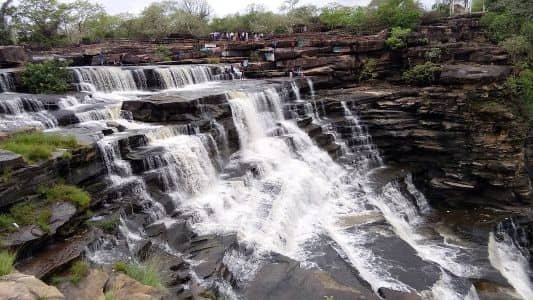
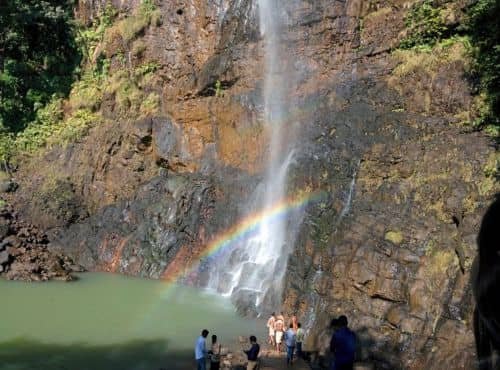
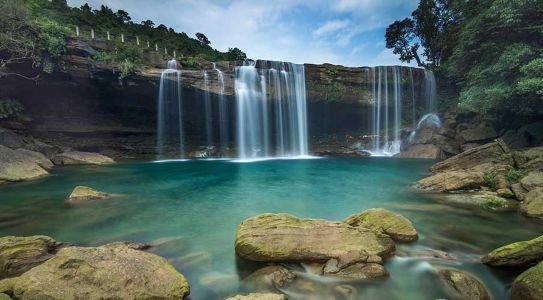
Thirparappu Waterfalls is where families from Nagercoil, Marthandam, and Thiruvananthapuram go on weekends to stand under falling water. The Kodayar River, known locally as the Kothaiyar, spreads across a wide rock shelf and drops about 50 feet (15 metres) into a fenced bathing area. The falls are near Kulasekharam in Kanyakumari district, roughly 35–45 km from Nagercoil.
It’s not a remote forest waterfall. There’s a ticket counter, a changing room, a children’s pool, boating upstream, and an ancient Shiva temple right next to the falls. Thirparappu is less about scenery and more about a good bath, a temple visit, and hot snacks from the stalls.
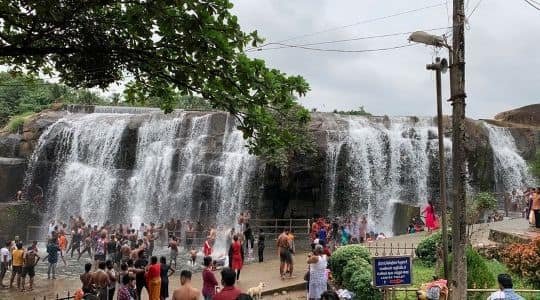
Thirparappu Falls: Key Details
| Detail | Information |
| Location | Thirparappu, near Kulasekharam, Kanyakumari district (PIN 629161) |
| River | Kodayar (Kothaiyar) |
| Height | About 15 m (50 ft) |
| Water source | Fed and regulated by Pechiparai Dam, about 13 km upstream |
| Managed by | Thirparappu town panchayat |
| Timings | 7:00 AM – 6:00 PM daily (ticket counter reportedly closes around 5 PM) |
| Entry fee | About ₹10 per adult, ₹5 per child (older listings say free or ₹5) |
| Camera | About ₹25–₹30 still; ₹75–₹100 video |
| Car parking | About ₹50 |
| Boating | About ₹50 per person for roughly 15 minutes |
| Distance from Nagercoil | 35–45 km (sources vary) |
| Distance from Kanyakumari town | About 55 km |
| Distance from Thiruvananthapuram | About 52–55 km (city); about 72–75 km from the airport |
| Nearest railway station | Kuzhithurai/Marthandam area (about 15 km); Nagercoil Junction for long-distance trains |
| Best months | June–September and January–March (outside heavy-rain spells) |
Can You Bathe at Thirparappu Right Now?
This is the first thing most visitors ask, and the answer depends on what’s happening upstream.
Bathing bans are common here:
- June 2026: heavy rain flooded the falls, and on 12 June the town panchayat banned bathing. Police and panchayat staff put up barricades to keep visitors away from the water.
- Last northeast monsoon: a ban ran for at least five straight days after Pechiparai Dam neared its 48-foot capacity and released water downstream.
- What causes it: most bans follow heavy rain in the catchment or large releases from Pechiparai. Even on a sunny day at the falls, the dam can raise the flow within hours.
We couldn’t confirm whether bathing is allowed as of early October 2026. With the northeast monsoon about to begin, call a local driver or check Tamil news for “திற்பரப்பு அருவி” before you make a special trip.
Why Thirparappu Is Different From Most Waterfalls
It Flows Almost All Year
Many waterfalls in the Western Ghats shrink to nothing by April. Thirparappu keeps flowing because Pechiparai Dam releases water into the Kodayar for irrigation, so there’s usually enough to bathe in during summer.
Above the drop, the riverbed is a flat rock surface that stretches about a quarter of a kilometre upstream. The water spreads across it in a wide, thin layer and then falls over the edge in several streams instead of one narrow jet.
Kanyakumari Gets Two Monsoons
Most of India gets one main rainy season. The southern tip of Tamil Nadu gets the southwest monsoon from June to September and the northeast monsoon from October to December. Thirparappu can therefore swell twice a year, and bathing bans can happen in both seasons.
It Was Part of Travancore Until 1956
Until the states were reorganised in 1956, this area belonged to the princely state of Travancore. Malayalam is still widely spoken around Thirparappu, the shops sell banana chips and Kerala-style snacks, and the temple architecture looks closer to Thiruvananthapuram than to Madurai. Visitors coming from northern Tamil Nadu often notice the difference immediately.
Thirparappu Mahadevar Temple
A fortified Shiva temple stands right beside the falls, facing the river. It holds several old inscriptions, including one attributed to a Pandya king of the 9th century. Many visitors go to the temple first and then walk down to the falls, which is how pilgrims have visited for centuries.
The temple is one of the twelve Shiva shrines on the Sivalaya Ottam route. On Maha Shivaratri, devotees run between all twelve temples across the district, and Thirparappu gets very busy that night.
Thirparappu Waterfalls Timings and Entry Charges
Most listings give the hours as 7 AM to 6 PM, all days. One source says the ticket counter closes at 5 PM, so arrive by mid-afternoon if you want time in the water.
Thirparappu charges small fees for nearly everything, and some visitors complain about it. Expect roughly these amounts:
- Entry: about ₹10 per adult and ₹5 per child.
- Still camera: ₹25–₹30.
- Video camera: ₹75–₹100.
- Car parking or vehicle pass: about ₹50.
- Boating: about ₹50 per person for a 15-minute ride on the Kodayar above the falls. One source says boats don’t run on Mondays.
- Changing rooms and the children’s pool: small separate charges.
Fees are set locally and change often, so keep ₹200–₹300 in small notes per person to cover everything.
How to Reach Thirparappu Falls
Thirparappu is closer to Thiruvananthapuram than to Kanyakumari town, so travellers flying in often find it easier to start from Kerala.
Road Distances From Nearby Cities
| Starting point | Approx. distance | Approx. drive time |
| Kulasekharam | About 7 km | 15 minutes |
| Marthandam | About 12–15 km | 30 minutes |
| Nagercoil | 35–45 km | 1–1.5 hours |
| Thiruvananthapuram city | 52–55 km | 1.5–2 hours |
| Kanyakumari town | About 55 km | 1.5–2 hours |
Distances to Nagercoil vary between sources because there are several routes through Thuckalay and Kulasekharam.
By Bus
Town buses run frequently from Marthandam and Kulasekharam, and some come directly from Nagercoil bus stand. From Kanyakumari town, the simplest option is a bus to Nagercoil or Marthandam and then a local bus from there.
By Train
The Kuzhithurai station, which serves the Marthandam area, is the closest stop on the Thiruvananthapuram–Nagercoil line. Many long-distance trains don’t stop there, so you may need to get off at Nagercoil Junction or Thiruvananthapuram Central and continue by road.
By Air
Thiruvananthapuram International Airport is the nearest, about 72–75 km away. A taxi takes roughly 2 hours, mostly on the NH 66 corridor through Neyyattinkara and Marthandam, followed by a short inland stretch.
A Half-Day Loop Around Thirparappu
You can combine several nearby sights into one trip without much backtracking. Here’s one order that works well:
- Thirparappu Falls and Mahadevar Temple: arrive around 8 AM, before the crowds, and take a boat ride if it’s running.
- Pechiparai Dam, about 13 km upstream: the reservoir that feeds the falls, set among forested hills. Combined with the falls, it explains why Thirparappu flows almost all year.
- Mathur Aqueduct (Mathoor Thottipalam): built in 1966 under Chief Minister K. Kamaraj to carry irrigation water across the Pahrali River valley. It stands up to 115 feet high on 28 pillars, and you can walk along the top beside the water channel. The government tourism site calls it Asia’s tallest and longest trough bridge at about 1 km. Wikipedia lists the main flume at about 380 metres, so the total length depends on what’s measured.
- Thiruvattar Adikesava Perumal Temple: a historic Vishnu temple in Thiruvattar town, close to the aqueduct.
- Padmanabhapuram Palace, Thuckalay: the old Travancore royal palace, a short drive south. It’s in Tamil Nadu but still maintained by the Kerala government.
If you have more time, Kanyakumari district has other waterfalls in the Western Ghats, including Kalikesam, Vattaparai, and Ullakaarvi. Most are smaller, more seasonal, and harder to reach.
Practical Tips
- Go early: by noon on weekends and school holidays, the bathing area gets very crowded.
- Footwear: bring rubber-soled sandals. The rock shelf is slippery wherever moss grows.
- Valuables: leave them in the car or with someone in your group while you bathe.
- Follow instructions: listen to the lifeguards and panchayat staff, especially when the water is high.
- Food: stalls near the entrance sell tapioca chips, bajji, and tea.
Thirparappu Waterfalls FAQs
Q1. Is bathing allowed at Thirparappu Falls?
Usually yes, in a fenced area below the falls. Authorities ban bathing after heavy rain or dam releases, so check the current status before making a long trip.
Q2. What is the entry fee for Thirparappu Waterfalls?
About ₹10 per adult and ₹5 per child. Cameras, parking, boating, and changing rooms cost extra, so carry small notes.
Q3. Which river forms Thirparappu Falls?
The Kodayar (Kothaiyar) River. Its flow is regulated by Pechiparai Dam upstream, which is why the falls keep running in most months.