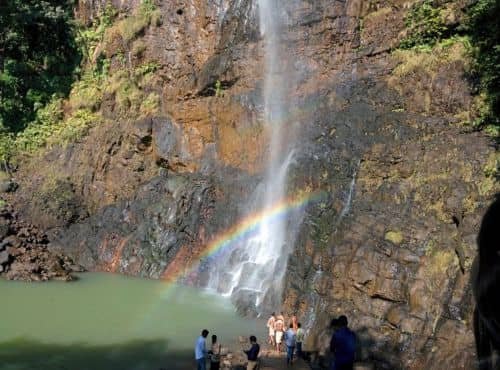
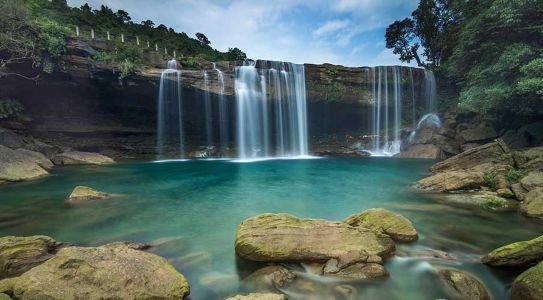
Devdari Waterfall is best understood as part of a larger forest trip rather than an isolated waterfall visit. It lies inside Chandraprabha Wildlife Sanctuary in Chandauli district, where rocky plateau terrain, forest, reservoirs and seasonal streams create one of the most attractive nature circuits near Varanasi. Devdari is normally visited together with nearby Rajdari Waterfall, making the pair a popular day trip during and immediately after the monsoon.
The sanctuary covers about 78 sq km between Chakia and Naugarh and was established in 1957. The Chandauli district administration specifically lists Rajdari and Devdari among its principal natural attractions.
Devdari Waterfall: Quick Facts
- Location: Chandraprabha Wildlife Sanctuary, Chandauli district, Uttar Pradesh
- Region: Between Chakia and Naugarh
- Distance from Varanasi: roughly 65–70 km
- Nearest major railway station: Pt. Deen Dayal Upadhyaya Junction, formerly Mughalsarai
- Railhead distance: about 50 km according to Chandauli district administration
- Nearest airport: Lal Bahadur Shastri International Airport, Varanasi, about 95 km
- Timings: Best treated as a daylight attraction; roughly 8 AM–5 PM is commonly reported
- Entry: Sanctuary/forest and vehicle charges may apply
- Best time: July to October for waterfall flow
- Ideal visit duration: 2–3 hours for Rajdari and Devdari together
- Best transport: Private car, taxi or motorcycle
What Makes Devdari Waterfall Special?
Devdari combines a waterfall with the landscape of a protected wildlife sanctuary. The Botanical Survey of India describes Chandraprabha Wildlife Sanctuary as a 78 sq km forest containing rivers, waterfalls, picnic areas and rich vegetation, with Rajdari and Devdari among its famous attractions.
Devdari is generally described as the more dramatic gorge-like waterfall of the Rajdari–Devdari pair. Water passes over the rocky plateau and drops into a deeper valley surrounded by forest.
Published information about the exact height varies, although a frequently cited figure is around 58 metres (190 feet). Since the Chandauli district’s official tourism page does not provide an exact height, it is better to treat this measurement as approximate rather than definitive.
The experience is also noticeably different between seasons. After strong monsoon rainfall, the cascade becomes powerful and the surrounding forest turns green. During the dry summer, water flow can become considerably weaker.
Devdari Waterfall Timings
The Chandauli district administration does not currently publish fixed opening and closing hours specifically for Devdari Waterfall. Since the waterfall lies within Chandraprabha Wildlife Sanctuary, it should be treated as a daytime forest attraction rather than a place with unrestricted access.
Current regional visitor information commonly gives approximately:
8:00 AM to 5:00 PM
These hours should be treated as indicative because forest access can change with weather, water levels and local restrictions.
For a comfortable visit, try to reach between 8 AM and 11 AM. This gives enough time to see both Rajdari and Devdari and leave the forest well before darkness.
Do not rely on online listings claiming that the waterfall is open 24 hours.
Entry Fee and Forest Charges
There is no clearly published current tariff on the Chandauli district’s Devdari tourism page.
Recent regional visitor information commonly reports a nominal forest entry charge of around ₹50 per person, with additional vehicle or parking charges. However, these amounts can change and should not be considered a guaranteed current tariff.
Pay only at the authorised forest/checkpost counter and check the displayed rates when you arrive.
Carry some cash because network connectivity and digital-payment availability can be unreliable inside forest areas.
Best Time to Visit Devdari Waterfall
July to September
This is the most dramatic period. Monsoon rain increases the flow and transforms the surrounding Chandraprabha forest into a much greener landscape.
However, strong flow also means greater danger. Wet rocks, slippery edges and swollen streams require extra caution.
October
October can be one of the best months if the monsoon has been healthy. The waterfall often retains substantial water while continuous heavy rain becomes less likely.
November to February
Winter is comfortable for a forest outing and picnic. Waterfall flow gradually decreases, but the cooler weather makes sightseeing easier.
March to June
Summer is generally the least rewarding period if your main purpose is seeing Devdari at full strength. The surrounding landscape becomes drier and water levels can fall substantially.
For waterfall photography, August to October usually provides the best combination of flow and scenery, but avoid visiting during extreme rainfall.
How to Reach Devdari Waterfall
From Varanasi
Devdari is roughly 65–70 km from Varanasi. Government tourism material places Chandraprabha Wildlife Sanctuary around 70 km from Varanasi.
A practical route is broadly:
Varanasi → Pt. Deen Dayal Upadhyaya Nagar → Chakia → Chandraprabha Wildlife Sanctuary → Rajdari/Devdari
Expect approximately 2–2.5 hours of driving, depending on traffic, road conditions and your starting point in Varanasi.
A hired taxi or private vehicle is the easiest option. If using a taxi, book it for the complete return trip because finding another vehicle inside the sanctuary can be difficult.
From Chakia
Chakia is the most useful nearby town for entering the Chandraprabha region.
From Chakia, continue towards Chandraprabha Wildlife Sanctuary and the Rajdari–Devdari area. Roads become quieter and increasingly forested as you approach the sanctuary.
The Chandauli district administration specifically states that travellers can reach Chakia first and then use another shared jeep towards Devdari.
For families, however, a private vehicle is considerably more convenient.
From Chandauli
From Chandauli town, travel towards Chakia and then continue into the Chandraprabha sanctuary area.
Allow plenty of time rather than planning Devdari as a quick roadside stop. Forest roads and monsoon conditions can make the final journey slower than expected.
By Bus or Shared Jeep
Public transport is possible but less convenient.
The official district tourism page recommends travelling from Mughalsarai/Pt. Deen Dayal Upadhyaya Nagar to Chakia by shared jeep and then taking another jeep towards Devdari.
Return services can be limited later in the day, so confirm your return transport before entering the sanctuary.
By Train
The official Chandauli tourism page identifies Mughalsarai, now Pt. Deen Dayal Upadhyaya Junction (DDU), as the nearest major railway station, approximately 50 km away.
DDU is a major railway junction with extensive long-distance connectivity.
From the station, either:
Hire a taxi directly to Devdari, or
Travel to Chakia → arrange local transport towards Chandraprabha Wildlife Sanctuary.
A taxi is preferable if you also want to visit Rajdari and other nearby attractions.
By Air
The nearest airport is Lal Bahadur Shastri International Airport in Varanasi.
The Chandauli district administration places it approximately 95 km from the waterfall area.
From the airport, hiring a full-day or overnight taxi is the simplest option.
Rajdari and Devdari: Visit Both Together
There is little reason to travel all the way to Chandraprabha and see only one waterfall.
The Chandauli district administration consistently presents Rajdari and Devdari together as the sanctuary’s principal waterfall attractions.
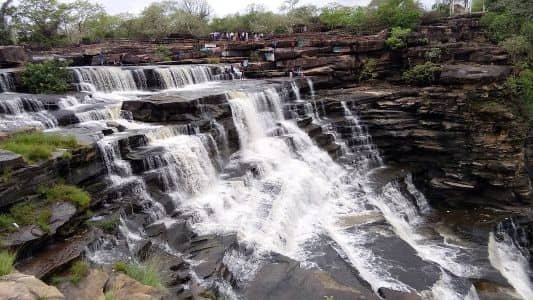
Rajdari has a broader, stepped appearance, while Devdari provides a more dramatic gorge landscape. Seeing both gives a better understanding of the terrain.
Depending on current permitted routes and access points, only a short drive or walk may separate the visitor areas. Follow Forest Department signage rather than attempting an unofficial riverbank shortcut.
Nearby Places to Visit
Rajdari Waterfall
Rajdari is the obvious first addition. It lies within the same sanctuary and is commonly visited on the same trip as Devdari. The Chandauli district administration describes both waterfalls as important picnic and nature attractions.
Chandraprabha Wildlife Sanctuary
The sanctuary itself deserves attention rather than being treated simply as the road to the waterfall. It covers approximately 78 sq km and contains dry deciduous forest, riverine habitat and wildlife including spotted deer, sambar, nilgai, wild boar and other species.
Chandraprabha Dam
The dam and reservoir add another scenic stop to the waterfall circuit. Chandauli district lists Chandraprabha among its notable lakes and dams.
Latif Shah Dam
Latif Shah Dam is another recognised attraction in Chandauli. The district administration lists both the dam and nearby Latif Shah Tomb among its tourist sites.
Naugarh
Travellers with additional time can explore the wider Naugarh landscape. The southern part of Chandauli becomes noticeably hillier and more forested than the Gangetic plains closer to Varanasi.
For a straightforward day trip, a practical itinerary is:
Varanasi → Chakia → Chandraprabha Dam → Rajdari → Devdari → return to Varanasi
Safety Tips for Devdari Waterfall
The waterfall’s rocky gorge becomes significantly more dangerous when the monsoon is strong.
- Stay behind barriers and away from cliff edges.
- Do not climb wet rocks beside the waterfall.
- Avoid swimming in deep pools or fast currents.
- Never cross flowing water during heavy rainfall.
- Wear shoes with strong wet-surface grip.
- Keep children closely supervised.
- Do not attempt risky photographs near the gorge.
- Avoid isolated forest trails.
- Carry sufficient drinking water.
- Keep food secured and do not feed wildlife.
- Take all plastic and rubbish back with you.
- Leave the waterfall area well before sunset.
- Follow Forest Department instructions if sections are closed.
Because this is a wildlife sanctuary, visitors should also keep noise low and avoid disturbing animals or birds. Government tourism information confirms that the sanctuary supports a range of mammals, birds and reptiles.
Devdari Waterfall FAQs
Q1. What are the timings of Devdari Waterfall?
A: The Chandauli district administration does not currently publish precise daily hours for Devdari. Regional visitor information commonly gives approximately 8 AM to 5 PM. Since it is inside Chandraprabha Wildlife Sanctuary, plan a daylight visit and check the current forest-gate timing on arrival.
Q2. How far is Devdari Waterfall from Varanasi?
A: Devdari and Chandraprabha Wildlife Sanctuary are roughly 65–70 km from Varanasi. Government tourism material places the sanctuary approximately 70 km away.
Q3. Which is the best time to visit Devdari Waterfall?
A: July to October is best for substantial waterfall flow. August and September usually provide stronger monsoon scenery, while October can offer a good balance between water volume and easier weather.
Q4. Can Rajdari and Devdari waterfalls be visited on the same day?
A: Yes. In fact, this is the most practical way to plan the trip. Both waterfalls are located within Chandraprabha Wildlife Sanctuary, and the Chandauli district administration promotes them together as major attractions.
Q5. What is the nearest railway station to Devdari Waterfall?
A: Pt. Deen Dayal Upadhyaya Junction (formerly Mughalsarai Junction) is the nearest major railway station identified by the Chandauli district administration, at approximately 50 km from the waterfall area. From the station, continue by taxi or travel via Chakia using local transport.